Jeep Wrangler Rough Idle Causes: Common Problems, Symptoms and How to Fix Them
Does your Jeep Wrangler shake, vibrate, or struggle to maintain a steady engine speed while sitting at a stoplight? A rough idle can be frustrating, especially when your Jeep normally runs smoothly. Sometimes the problem is minor, such as a dirty throttle body. In other cases, it could indicate a vacuum leak, faulty ignition component, fuel delivery problem, or sensor malfunction.
Understanding the most common Jeep Wrangler rough idle causes can help you identify the problem before it develops into a more expensive repair.
Whether you own an older Wrangler TJ, JK, or a newer JL model, this guide explains why your engine may idle roughly, which symptoms to watch for, and what you can do to get your Jeep running smoothly again.
What Is a Rough Idle in a Jeep Wrangler?
A rough idle occurs when your engine struggles to maintain a consistent RPM while the vehicle is stationary and the engine is running.
A healthy Jeep Wrangler should generally idle smoothly without excessive vibration, unusual noises, or significant fluctuations in engine speed.
When something interferes with the engine’s air-fuel mixture, ignition timing, or combustion process, the engine may begin running unevenly.
Common signs of a rough idle include:
- Noticeable shaking or vibration while stopped.
- Engine RPM fluctuating without pressing the accelerator.
- Unusual engine sounds or irregular exhaust noises.
- Delayed acceleration when moving away from a stop.
- Engine stalling at traffic lights or intersections.
- Check Engine Light illuminating on the dashboard.
- Increased fuel consumption.
- Difficulty starting the engine.
A rough idle can happen when the engine is cold, when it reaches operating temperature, or under specific conditions such as running the air conditioning.
Identifying when the symptoms occur can help narrow down the possible cause.
10 Common Jeep Wrangler Rough Idle Causes
Several mechanical and electrical problems can cause an unstable idle. Some are relatively inexpensive to fix, while others require more detailed engine diagnostics.
Here are ten common problems worth investigating.
1. Dirty Throttle Body
<image-placeholder>
The throttle body controls how much air enters the engine. Over time, carbon deposits, dirt, and oil residue can accumulate around the throttle plate.
When the throttle body becomes dirty, airflow at idle may become inconsistent.
This can cause:
- Unstable engine RPM.
- Engine vibration while stationary.
- Hesitation during acceleration.
- Occasional stalling.
- Poor throttle response.
How to fix it:
Inspect the throttle body for carbon buildup. If cleaning is necessary, use an appropriate throttle body cleaner and follow the manufacturer’s service procedure.
Some electronically controlled throttle bodies require special handling and an idle or throttle relearn procedure after cleaning.
Avoid forcing the electronic throttle plate open unless the manufacturer’s instructions specifically allow it.
2. Vacuum Leaks
A vacuum leak occurs when unmetered air enters the engine through a damaged hose, intake gasket, or another leaking connection.
This additional air can disrupt the engine’s air-fuel mixture, making it difficult to maintain a stable idle.
Common symptoms include:
- High or fluctuating idle RPM.
- Hissing sounds from the engine compartment.
- Rough running at idle.
- Lean-condition trouble codes.
- Occasional engine stalling.
How to fix it:
Inspect vacuum hoses, intake connections, and relevant gaskets for cracks, loose fittings, or deterioration.
A professional smoke test can help identify leaks that are difficult to locate visually.
Do not use flammable sprays to search for vacuum leaks around a running engine.
3. Faulty Spark Plugs
Spark plugs ignite the air-fuel mixture inside the engine cylinders. When they become worn, fouled, or damaged, combustion may become inconsistent.
A weak or missing spark in one or more cylinders can cause a noticeable rough idle.
Possible symptoms include:
- Engine shaking while stationary.
- Misfires during acceleration.
- Reduced engine performance.
- Increased fuel consumption.
- Check Engine Light activation.
How to fix it:
Inspect the spark plugs for excessive wear, deposits, oil contamination, or damage.
Replace them according to the recommended maintenance interval and use the correct spark plug specification for your Wrangler’s engine.
4. Faulty Ignition Coils
Ignition coils provide the electrical voltage needed to fire the spark plugs.
A failing coil can cause one or more cylinders to misfire, resulting in an uneven engine idle.
Common symptoms include:
- Rough engine operation.
- Intermittent misfires.
- Poor acceleration.
- Engine hesitation.
- Check Engine Light with misfire codes.
How to fix it:
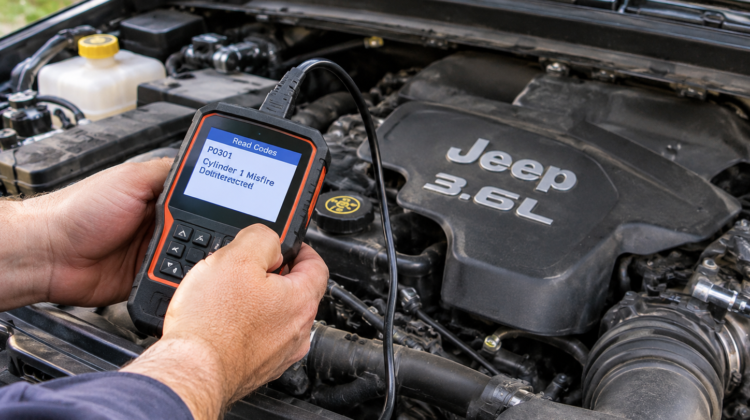
Use an OBD-II scanner to check for misfire-related trouble codes.
Codes such as P0300 indicate random or multiple-cylinder misfires, while P0301, P0302, and similar codes identify misfires associated with specific cylinders.
A mechanic can perform ignition system testing to determine whether a coil, spark plug, or another component is responsible.
5. Dirty or Faulty Fuel Injectors
Fuel injectors deliver the correct amount of fuel into the engine.
When an injector becomes clogged, dirty, or defective, the affected cylinder may receive an incorrect amount of fuel.
This can lead to uneven combustion and a rough idle.
Watch for these symptoms:
- Engine vibration.
- Difficulty starting.
- Poor fuel economy.
- Hesitation during acceleration.
- Cylinder-specific misfire codes.
How to fix it:
A professional fuel system inspection can determine whether the injectors are clogged, leaking, or electrically faulty.
Depending on the condition, injector cleaning or replacement may be necessary.
6. Faulty Mass Airflow or MAP Sensor
The engine computer relies on sensor information to determine how much fuel the engine needs.
Depending on the Wrangler’s engine and generation, the engine management system may use a MAP sensor, a mass airflow sensor, or other inputs to calculate engine load and airflow.
A faulty or inaccurate sensor reading can cause an incorrect air-fuel mixture.
Possible symptoms include:
- Rough idle.
- Poor acceleration.
- Increased fuel consumption.
- Engine hesitation.
- Check Engine Light activation.
How to fix it:
Use a diagnostic scanner to check for relevant sensor-related trouble codes and inspect the sensor wiring and electrical connections.
Don’t automatically replace the sensor based on a trouble code alone. Wiring problems, intake leaks, and other mechanical issues can produce similar symptoms.
7. Exhaust Gas Recirculation (EGR) Problems
Some Jeep Wrangler engines use an Exhaust Gas Recirculation system to reduce nitrogen oxide emissions.
If the EGR valve becomes stuck open or develops a malfunction, excessive exhaust gas may enter the intake during idle.
This can disrupt combustion and cause an unstable engine.
Possible symptoms include:
- Rough idle.
- Engine hesitation.
- Stalling.
- Reduced performance.
- Relevant emissions-related trouble codes.
How to fix it:
Have the EGR system inspected if your particular engine is equipped with one.
The repair may involve cleaning, electrical diagnosis, or replacing a defective component.
8. Weak Battery or Charging System Problems
Although battery problems are more commonly associated with starting issues, unstable system voltage can also affect electronic engine management and other vehicle systems.
A weak battery, failing alternator, loose connection, or poor ground can contribute to electrical irregularities.
Possible symptoms include:
- Slow engine cranking.
- Dashboard warning lights.
- Intermittent electrical problems.
- Unusual engine behavior.
- Charging system warnings.
How to fix it:
Have the battery, alternator, charging system, and electrical connections tested.
Pay attention to loose battery terminals and corroded ground connections.
9. Engine Mount Problems
Engine mounts secure the engine to the vehicle while absorbing normal engine vibration.
When a mount becomes worn, cracked, or damaged, more vibration can transfer into the Jeep’s frame and cabin.
This can make the vehicle feel like it has a rough idle even when engine RPM remains stable.
Common symptoms include:
- Excessive vibration at stoplights.
- Clunking when shifting between Drive and Reverse.
- Noticeable engine movement.
- Increased vibration when the air conditioning is running.
How to fix it:
Have the engine mounts inspected for cracks, deterioration, or excessive movement.
A damaged mount should be replaced with a suitable replacement part.
10. Low Fuel Pressure
Your Wrangler’s fuel system must deliver sufficient fuel pressure for proper combustion.
A weak fuel pump, restricted fuel filter or pickup, faulty pressure regulator where equipped, or electrical supply problem can interfere with fuel delivery.
Possible symptoms include:
- Rough idle.
- Difficulty starting.
- Engine hesitation.
- Loss of power under acceleration.
- Unexpected stalling.
How to fix it:
A technician can perform fuel pressure and fuel delivery tests to determine whether the fuel system is operating within the manufacturer’s specifications.
Avoid replacing the fuel pump without confirming that fuel pressure is actually the problem.
Jeep Wrangler Rough Idle Causes by Symptom
Paying attention to when the rough idle happens can help narrow down the diagnosis.
| Symptom | Possible Causes |
|---|---|
| Rough idle when cold | Vacuum leaks, ignition problems, sensor issues |
| Rough idle when warm | Dirty throttle body, ignition faults, fuel delivery problems |
| Rough idle with AC on | Engine mounts, additional engine load, idle control or electrical issues |
| Rough idle with Check Engine Light | Misfires, sensor faults, air-fuel mixture problems |
| Rough idle followed by stalling | Vacuum leaks, fuel delivery issues, throttle body problems |
| Rough idle with poor acceleration | Ignition coils, spark plugs, injectors, fuel pressure |
| Engine shakes but RPM stays stable | Engine mounts, misfire, uneven combustion |
These are diagnostic clues rather than definitive diagnoses. Several problems can produce similar symptoms.
Why Does My Jeep Wrangler Idle Rough When Cold?
Some engine speed variation is normal during a cold start.
When the engine is cold, the engine computer adjusts fuel delivery and idle speed to help the engine warm up and operate efficiently.
However, excessive shaking, repeated misfires, or stalling should not be considered normal.
Common reasons for rough cold starts include:
- Worn spark plugs.
- Weak ignition coils.
- Vacuum leaks.
- Dirty fuel injectors.
- Incorrect engine temperature sensor readings.
- Air intake problems.
If your Wrangler runs roughly for several minutes and then smooths out as it warms up, pay attention to whether the Check Engine Light comes on and whether diagnostic trouble codes are stored.
A scan tool can provide useful information even if the warning light is not currently illuminated.
Why Does My Jeep Wrangler Shake at Idle but Run Fine While Driving?
This is a common complaint among Jeep owners.
If your Wrangler shakes while stopped but feels normal when accelerating, the problem may be more noticeable at low engine speeds.
At idle, the engine operates with relatively little rotational momentum, so small combustion irregularities can become more noticeable.
Possible causes include:
- Worn engine mounts transferring vibration into the cabin.
- A weak ignition coil causing an intermittent misfire.
- Dirty throttle body affecting idle airflow.
- Vacuum leaks disrupting the air-fuel mixture.
- Fuel injector problems affecting individual cylinders.
A useful first step is to monitor the engine RPM.
If the RPM remains steady but the cabin vibrates excessively, inspect the engine mounts and consider checking for subtle misfires.
If the RPM fluctuates or the engine sounds uneven, investigate the engine’s air, fuel, and ignition systems.
How to Diagnose a Jeep Wrangler Rough Idle
Before replacing parts, follow a systematic troubleshooting process.
This can help prevent unnecessary expenses and identify the actual source of the problem.
Step 1: Check the Dashboard Warning Lights
Look for the Check Engine Light or other warning indicators.
If the Check Engine Light is flashing, stop driving as soon as it is safe to do so. A flashing light commonly indicates an active misfire that could damage the catalytic converter.
Step 2: Scan for Diagnostic Trouble Codes
Connect an OBD-II scanner to retrieve stored and pending trouble codes.
Some useful codes to understand include:
- P0300: Random or multiple-cylinder misfire detected.
- P0301: Cylinder 1 misfire detected.
- P0302: Cylinder 2 misfire detected.
- P0171: System too lean, Bank 1.
- P0174: System too lean, Bank 2, where applicable.
- P0106: MAP sensor range or performance problem.
- P0107: MAP sensor circuit low input.
- P0108: MAP sensor circuit high input.
These codes identify systems or conditions that need investigation. They do not automatically prove that a particular sensor or component is defective.
Step 3: Inspect the Air Intake System
Check the air intake tubing, connections, clamps, and vacuum hoses.
Look for:
- Cracked rubber hoses.
- Loose intake connections.
- Damaged wiring.
- Disconnected vacuum lines.
- Visible contamination around the throttle body.
Step 4: Inspect the Ignition System
If your Wrangler has misfire symptoms, inspect the spark plugs and ignition coils.
Look for worn electrodes, damaged insulation, oil contamination, and loose electrical connectors.
Step 5: Check Fuel Delivery
If the ignition and intake systems appear normal, have the fuel pressure and injector operation tested.
Step 6: Have the Engine Professionally Diagnosed
If the cause remains unclear, a qualified mechanic can perform additional tests, including:
- Smoke testing for vacuum leaks.
- Fuel pressure testing.
- Injector balance testing.
- Compression testing.
- Cylinder leak-down testing.
- Live engine sensor data analysis.
These tests can help distinguish between electrical, fuel, air intake, and mechanical engine problems.
How Much Does It Cost to Fix a Jeep Wrangler Rough Idle?
Repair costs depend on the actual cause, model year, engine, parts availability, and labor rates.
The following table provides broad illustrative US repair budget ranges, not verified quotes for every Wrangler.
| Possible Repair | Estimated Cost (USD) |
|---|---|
| Throttle body cleaning | $75–$200 |
| Vacuum hose replacement | $50–$250 |
| Spark plug replacement | $150–$400 |
| Ignition coil replacement | $100–$350 per affected coil |
| Fuel injector cleaning | $100–$300 |
| Fuel injector replacement | $200–$600 or more |
| Engine mount replacement | $250–$800 or more |
| Fuel pump replacement | $400–$1,000 or more |
| Diagnostic inspection | $100–$200 |
Actual prices can vary significantly, particularly when multiple components need replacement.
Before approving repairs, ask the mechanic to explain the diagnostic findings and identify which parts have actually failed.
How to Prevent Rough Idling in Your Jeep Wrangler
Regular maintenance can reduce the likelihood of rough idle problems and help keep your engine operating properly.
Here are some practical maintenance tips:
- Follow the recommended spark plug service interval. Replace spark plugs according to your engine’s maintenance schedule.
- Inspect the air intake system. Check hoses, clamps, and connections for leaks or damage.
- Maintain the fuel system. Use fuel that meets your engine’s requirements and address fuel delivery problems promptly.
- Keep electrical connections clean. Inspect battery terminals and relevant ground connections.
- Address warning lights early. Don’t ignore persistent Check Engine Light warnings.
- Use the correct engine oil. Follow the manufacturer’s recommended oil specification and change intervals.
- Inspect engine mounts. Look for deterioration or excessive movement, particularly on older Wranglers.
A little preventative maintenance can help avoid more expensive repairs later.
Frequently Asked Questions About Jeep Wrangler Rough Idle
1. Why is my Jeep Wrangler idling rough but not showing a Check Engine Light?
A rough idle can occur without triggering the Check Engine Light.
Possible causes include worn engine mounts, minor vacuum leaks, early ignition problems, or intermittent combustion issues that haven’t met the conditions required to activate the warning light.
A diagnostic scan may still reveal pending codes or useful live data.
2. Can a dirty throttle body cause a Jeep Wrangler to idle rough?
Yes. Carbon buildup around the throttle plate can interfere with airflow at low engine speeds.
Cleaning the throttle body may help restore smooth idle operation if contamination is actually the cause.
Follow the correct cleaning and relearn procedure for your Wrangler’s engine.
3. Why does my Jeep Wrangler shake when stopped at a red light?
Engine vibration while stopped can be caused by worn engine mounts, ignition misfires, vacuum leaks, or inconsistent combustion.
If the engine RPM remains steady but the cabin vibrates, inspect the engine mounts as well as the ignition system.
4. Can bad spark plugs cause rough idling?
Yes. Worn or fouled spark plugs can produce incomplete combustion and engine misfires.
This can cause shaking, unstable RPM, poor fuel economy, and reduced engine performance.
5. Can low-quality fuel cause rough idle?
Fuel that does not meet your engine’s requirements or contaminated fuel can contribute to poor combustion and engine performance.
If the problem starts immediately after refueling, consider having the fuel system inspected.
6. Is it safe to drive a Jeep Wrangler with a rough idle?
It depends on the severity and underlying cause.
A mild vibration may not indicate an immediate emergency, but a severe rough idle, repeated stalling, overheating, or loss of power should be addressed promptly.
If the Check Engine Light is flashing, stop driving when safe and arrange an inspection because continued misfiring can damage the catalytic converter.
7. Why does my Jeep Wrangler idle rough when the AC is on?
Turning on the air conditioning adds mechanical load to the engine.
A properly functioning engine management system should compensate for this additional load.
If the vibration becomes excessive, possible causes include weak engine mounts, ignition problems, throttle body issues, or an abnormal AC compressor load.
8. Can a vacuum leak cause my Jeep Wrangler to stall?
Yes. A significant vacuum leak can disrupt the air-fuel mixture enough to cause unstable idle operation or stalling.
Inspect the intake system and have a smoke test performed if a leak is suspected.
Final Thoughts: Fix the Cause Before It Gets Worse
A rough idle is one of those problems that can start as a minor annoyance but eventually develop into a more serious engine issue.
The most common Jeep Wrangler rough idle causes include dirty throttle bodies, vacuum leaks, worn spark plugs, faulty ignition coils, fuel injector problems, sensor malfunctions, and damaged engine mounts.
The key is to identify the underlying problem before spending money on unnecessary replacement parts.
Start by observing when the rough idle happens, checking for warning lights, and scanning for diagnostic trouble codes. If the problem persists, have the engine inspected by a qualified mechanic.
If you’re considering purchasing another Wrangler, understanding its engine condition and maintenance history is just as important as checking its mileage and overall appearance.
Explore our selection of Jeeps for Sale to discover available Jeep models, compare features, and find a Wrangler that’s ready for your next adventure.

Leave a Reply