Jeep Wrangler Fuse Box Diagram: Location, Fuse Chart & Guide
Having electrical problems with your Jeep Wrangler? Maybe your headlights stopped working, the power windows won’t respond, the radio suddenly went off, or your 12V power outlet isn’t supplying electricity. Before assuming there’s a major electrical problem, checking the fuse box is a good place to start.
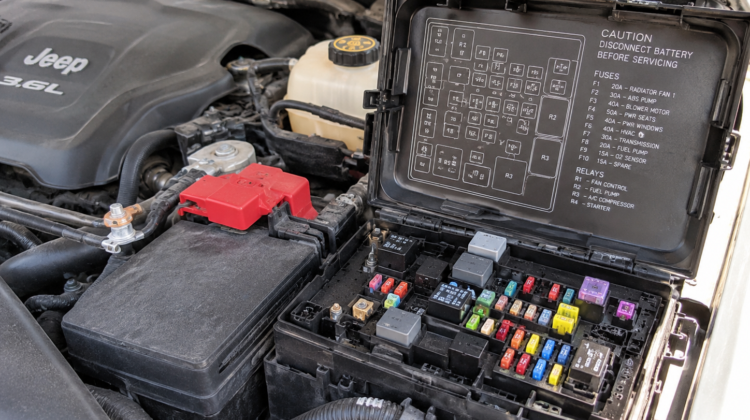
A Jeep Wrangler fuse box diagram helps you identify the location, function, and amperage rating of individual fuses and relays. These small components protect your Jeep’s electrical systems from excessive current and help prevent damage to important equipment.
However, Jeep Wrangler fuse layouts aren’t identical across all model years. The JK and JL generations use different electrical configurations, and fuse assignments can vary depending on the engine, trim, and installed equipment.
In this guide, we’ll explain where to find the fuse box, how to read the diagram, what common fuses control, and how to safely replace a blown fuse.
Where Is the Jeep Wrangler Fuse Box Located?
The location of your Jeep Wrangler’s fuse box depends on its model year and generation.
On many newer Wrangler models, the primary fuse panel is located inside the engine compartment, near the battery.
This assembly is commonly called the Power Distribution Center (PDC). Older models may use a Totally Integrated Power Module (TIPM), which performs similar electrical distribution and protection functions.
The main fuse panel typically contains:
- Mini fuses
- Cartridge fuses
- High-current fuses
- Electrical relays
- Power distribution connections
The fuse box cover usually includes a diagram or identification label showing the fuse positions, functions, and amperage ratings.
Jeep Wrangler JK Fuse Box Location (2007–2018)
The third-generation Jeep Wrangler JK uses a Totally Integrated Power Module (TIPM).
You can find it in the engine compartment, underneath a protective cover near the battery.
To access it:
- Park your Jeep on a level surface.
- Turn off the ignition and remove the key.
- Open the hood.
- Locate the battery.
- Look for the black fuse and relay housing nearby.
- Release the cover clips carefully to access the fuses.
The inside of the cover typically provides fuse and relay identification information.
The JK generation covers several model years, so always check the diagram for your exact vehicle.
Jeep Wrangler JL Fuse Box Location (2018–2026)
The fourth-generation Jeep Wrangler JL uses a Power Distribution Center located in the engine compartment near the battery.
Unlike some older vehicles, the JL generally uses a centralized under-hood fuse and relay center rather than a traditional separate interior fuse panel.
The PDC contains different fuse types, including cartridge fuses and micro fuses.
To access it:
- Turn off the ignition and electrical accessories.
- Open the hood.
- Find the battery and nearby Power Distribution Center.
- Carefully release the fuse box cover.
- Check the identification information printed on the cover.
Important: Make sure the fuse box cover is properly positioned and fully latched after inspection. An improperly installed cover can allow moisture to enter the electrical distribution center.
Jeep Wrangler Fuse Box Diagram by Model Year
Jeep has produced several Wrangler generations, and their fuse layouts have changed over time.
Use the following references to find the diagram that matches your vehicle.
| Jeep Wrangler Generation | Model Years | Fuse System |
|---|---|---|
| YJ | 1987–1995 | Generation-specific fuse panel |
| TJ | 1997–2006 | Generation-specific fuse panel |
| JK | 2007–2018 | Totally Integrated Power Module (TIPM) |
| JL | 2018–2026 | Power Distribution Center (PDC) |
Note: The 2018 model year overlaps between the JK and JL generations. Make sure you identify your vehicle’s generation before using a fuse chart.
For more detailed diagrams and fuse assignments, these references are useful:
- Jeep Wrangler JK Fuse Box Diagrams (2007–2018)
- Jeep Wrangler JL Fuse Box Diagrams (2018–2026)
- Jeep Wrangler Fuse Diagrams by Model Year
For the most accurate information, consult the owner’s manual for your specific model year, engine, and equipment configuration.
Understanding the Jeep Wrangler Fuse Box Diagram
A fuse diagram may look confusing at first, especially when the panel contains dozens of small fuses and relays.
However, understanding a few basic markings makes it much easier to identify the correct component.
1. Fuse Position or Cavity Number
Each fuse has a designated position within the fuse box.
For example, a diagram might identify a fuse as F01, F02, F03, or F04.
These numbers correspond to specific locations within the Power Distribution Center.
Always match the position number on the diagram with the physical fuse location.
2. Fuse Amperage Rating
The amperage rating indicates how much electrical current a fuse is designed to handle before its internal element melts and interrupts the circuit.
Common automotive fuse ratings include:
| Fuse Rating | Typical Color |
|---|---|
| 5A | Tan |
| 7.5A | Brown |
| 10A | Red |
| 15A | Blue |
| 20A | Yellow |
| 25A | Clear or White |
| 30A | Green |
| 40A | Orange |
Fuse colors are useful identification aids, but always confirm the printed amperage rating.
Never replace a fuse with one that has a higher amperage rating than specified.
3. Fuse Function
The function column tells you which electrical component or system a fuse protects.
Depending on the model year and configuration, fuse assignments may include:
- Starter system
- Fuel pump
- Engine control module
- Headlights
- Windshield wipers
- Radio and infotainment system
- Power windows
- Air conditioning
- Auxiliary power outlets
- Interior lighting
Some fuses protect multiple components, so check the exact diagram before removing anything.
4. Relays
Relays are electrically operated switches that control higher-current circuits.
They allow a relatively low-current control signal to operate equipment that requires more electrical power.
Common relay applications include:
- Starter circuit
- Cooling fan
- Fuel pump
- Ignition system
- Air conditioning
A faulty relay can cause symptoms similar to a blown fuse.
Common Jeep Wrangler Fuses and What They Control
The following table explains common electrical systems that may be protected by fuses in different Wrangler generations.
These are component categories, not universal fuse numbers. The exact fuse position and amperage must be verified using your vehicle’s diagram.
| Electrical Component | What the Fuse Protects |
|---|---|
| Starter | Starter motor control circuit |
| Fuel Pump | Fuel pump electrical circuit |
| Headlights | Headlight electrical circuits |
| Windshield Wipers | Wiper motor circuit |
| Radio | Infotainment and audio system |
| Power Windows | Window control system |
| HVAC Blower | Cabin ventilation fan |
| Power Outlets | 12V auxiliary outlets |
| Cooling Fan | Engine cooling fan circuit |
| Interior Lights | Cabin lighting system |
Jeep Wrangler Radio Fuse
If your radio or infotainment system suddenly stops working, a blown fuse may be responsible.
However, the radio may share power distribution with other electrical components, depending on the Wrangler generation and equipment.
Before replacing anything, check the owner’s manual for the correct radio-related fuse assignment.
Jeep Wrangler Headlight Fuse
Headlight problems can sometimes be caused by a blown fuse.
If one or both headlights stop working, inspect the corresponding lighting circuit and check the bulbs, connectors, wiring, and other components as well.
Modern Wrangler lighting systems can use separate circuits and electronic controls, so don’t assume every lighting problem comes from a single fuse.
Jeep Wrangler Power Outlet Fuse
The 12V auxiliary power outlets are useful for charging devices and powering compatible accessories.
On certain JL configurations, the rear power outlet has separate fuse assignments depending on whether it is configured for constant battery power or ignition-controlled operation.
For example, the 2024 Wrangler owner’s manual identifies:
- F43 – 20A yellow, rear power outlet (battery powered at all times).
- F45 – 20A yellow, rear power outlet (powered when ignition is ON/RUN or ACC).
These assignments are specific to the documented configuration. Check your own owner’s manual before replacing a fuse.
If your power outlet isn’t working, inspect the correct circuit and make sure the connected accessory isn’t drawing more power than the outlet allows.
Signs That Your Jeep Wrangler Has a Blown Fuse
A blown fuse can cause one electrical component or several related systems to stop working.
Here are some common warning signs:
1. Electrical Accessories Suddenly Stop Working
If your radio, power windows, interior lights, or auxiliary outlets stop working unexpectedly, a blown fuse is one possible cause.
2. Headlights or Exterior Lights Stop Working
A lighting circuit problem can cause headlights, parking lights, or other exterior lighting components to malfunction.
3. The Windshield Wipers Stop Responding
If your wipers suddenly stop operating, inspect the appropriate fuse and relay before assuming the wiper motor has failed.
4. The 12V Power Outlet Doesn’t Work
If your phone charger or other accessory doesn’t receive power, check the auxiliary power outlet circuit.
5. A Replacement Fuse Blows Again
If a new fuse immediately blows after installation, there may be a short circuit, damaged wiring, faulty component, or another electrical problem.
Replacing the fuse repeatedly without investigating the cause can lead to further damage.
How to Check and Replace a Blown Jeep Wrangler Fuse
Replacing a standard automotive fuse is relatively straightforward, but you need to follow the correct procedure.
Step 1: Turn Off the Ignition
Before inspecting the fuse box, turn off the engine and ignition.
Switch off electrical accessories such as the headlights, radio, and air conditioning.
Step 2: Locate the Correct Fuse
Use the diagram printed on the fuse box cover or the vehicle’s owner’s manual.
Identify the fuse associated with the electrical component that isn’t working.
Step 3: Remove the Fuse
Use an appropriate fuse puller to carefully remove the fuse from its slot.
Avoid pulling on surrounding wiring or using excessive force.
Step 4: Inspect the Fuse
Look through the transparent plastic housing.
A functioning fuse normally has an intact metal element.
A blown fuse may have a broken or melted metal element.
If the damage isn’t obvious, a multimeter or automotive circuit tester can help confirm whether the fuse is functioning.
Step 5: Install a Replacement Fuse
Replace the damaged fuse with another fuse that has the exact same amperage rating and appropriate type.
For example, if the original fuse is rated at 15A, install another 15A fuse.
Never install a higher-rated fuse to prevent it from blowing again.
Step 6: Test the Electrical Component
After replacing the fuse, turn the ignition on and check whether the affected electrical component works properly.
If the replacement fuse blows again, stop troubleshooting by simply replacing fuses and have the circuit inspected.
Why Does a Jeep Wrangler Fuse Keep Blowing?
A fuse is designed to protect an electrical circuit from excessive current.
When a fuse repeatedly blows, it usually indicates an underlying problem.
Here are some common causes.
Short Circuit
A short circuit occurs when electrical current flows through an unintended path.
Damaged insulation, exposed wiring, or faulty electrical connections can cause this problem.
Faulty Electrical Accessory
An aftermarket accessory may draw excessive current or have an internal electrical fault.
This can happen with:
- LED light bars
- Auxiliary lighting
- Winches
- Air compressors
- Additional power outlets
- Aftermarket audio equipment
Incorrect Fuse Installation
Installing a fuse with the wrong rating or type can cause electrical problems.
Always follow the manufacturer’s specifications.
Water or Moisture Intrusion
Moisture inside electrical connectors or the fuse box can cause corrosion and electrical faults.
Make sure the fuse box cover is properly installed and inspect any signs of water damage.
Damaged Wiring
Off-road driving, modifications, and improper accessory installation can damage wiring.
Pay particular attention to wiring near bumpers, suspension components, engine accessories, and aftermarket lighting installations.
Tips for Maintaining Your Jeep Wrangler’s Electrical System
Keeping your Wrangler’s electrical system in good condition can prevent unexpected problems, especially if you frequently drive off-road or use additional electrical accessories.
Here are some practical maintenance tips:
- Inspect the fuse box regularly. Look for corrosion, moisture, damaged fuses, or signs of overheating.
- Use the correct fuse ratings. Never substitute a higher-amperage fuse.
- Secure aftermarket wiring. Make sure additional electrical accessories are properly installed and protected.
- Avoid overloading power outlets. Follow the vehicle’s specified power limits.
- Keep the fuse box cover sealed. Make sure it is correctly installed after inspection.
- Check electrical connections. Loose or corroded connections can cause intermittent electrical problems.
- Investigate repeated fuse failures. A fuse that repeatedly blows indicates an issue that needs proper diagnosis.
If you have installed additional lights, winches, or other electrical equipment, consider having the wiring and circuit protection checked by a qualified automotive electrician.
Frequently Asked Questions About Jeep Wrangler Fuse Box Diagrams
1. Where is the fuse box on a Jeep Wrangler?
On most modern Jeep Wrangler JK and JL models, the main fuse box is located in the engine compartment near the battery.
Older generations may have different fuse panel configurations. Check your owner’s manual for the exact location.
2. Does the Jeep Wrangler have an interior fuse box?
Fuse panel arrangements vary by generation.
The JL generation generally uses a centralized Power Distribution Center in the engine compartment, while older models may have additional fuse panels or junction components.
Check the documentation for your specific Wrangler.
3. How do I know if a Jeep Wrangler fuse is blown?
A blown fuse usually has a broken or melted metal element inside its plastic housing.
You can also use a multimeter to check electrical continuity.
4. Can I replace a Jeep Wrangler fuse myself?
Yes. Standard blade and cartridge fuses can often be replaced by vehicle owners with the correct tools and information.
However, high-current fuses and circuits associated with critical vehicle systems may require professional inspection.
5. What happens if I install a higher-amp fuse?
Installing a higher-amperage fuse can allow excessive current to flow through wiring and electrical components.
This can cause overheating, electrical damage, and potentially a fire.
Always use the specified fuse rating.
6. Why does my Jeep Wrangler keep blowing fuses?
Repeated fuse failures may indicate a short circuit, damaged wiring, faulty accessories, or excessive electrical load.
If a replacement fuse blows again, have the circuit diagnosed rather than continuing to replace it.
7. Where can I find the correct Jeep Wrangler fuse diagram?
The best source is your Jeep Wrangler owner’s manual or the fuse identification chart on the Power Distribution Center cover.
You can also consult official Mopar vehicle documentation and model-specific fuse references.
Final Thoughts: Keep Your Jeep Wrangler’s Electrical System in Good Condition
Understanding your Jeep Wrangler fuse box diagram makes it easier to identify electrical problems, locate the correct fuse, and perform basic troubleshooting.
Whether you’re dealing with faulty headlights, a non-working radio, power outlet problems, or other electrical issues, start by checking the correct fuse chart for your Wrangler’s generation and model year.
Remember that fuse layouts and amperage ratings can vary between configurations. Always use the correct replacement fuse and never ignore a circuit that repeatedly blows fuses.
If you’re planning to upgrade your Jeep with additional lighting, recovery equipment, or other electrical accessories, make sure the installation is properly wired and protected.
And if you’re currently looking for your next adventure vehicle, check out our selection of Jeeps for Sale to explore available Jeep models, compare features, and find a Wrangler that fits your needs.
