Jeep Wrangler Check Engine Light Causes: What Every Owner Should Know
Few things ruin a good drive faster than seeing the dreaded dashboard warning suddenly appear. If you own a Wrangler, understanding the most common jeep wrangler check engine light causes can save you time, money, and a lot of unnecessary stress.
The good news? A check engine light doesn’t always mean catastrophic engine failure. Sometimes the fix is surprisingly simple. Other times, it’s an early warning sign that prevents much larger repairs down the road.
In this guide, we’ll break down the most common reasons your Jeep Wrangler’s check engine light comes on, how serious each issue might be, and what you should do next.
What Does the Check Engine Light Mean on a Jeep Wrangler?
The check engine light—also known as the Malfunction Indicator Lamp (MIL)—is part of your Wrangler’s onboard diagnostics system. When sensors detect something outside normal operating parameters, the system stores a trouble code and illuminates the warning light.
Depending on the issue, the light may:
- Stay solid
- Flash intermittently
- Blink continuously
A flashing check engine light usually indicates a more urgent problem, often related to engine misfires that could damage the catalytic converter.
Most Common Jeep Wrangler Check Engine Light Causes
1. Loose or Damaged Gas Cap
It sounds minor, but this is one of the top jeep wrangler check engine light causes.
Your Wrangler’s EVAP (evaporative emissions) system relies on a sealed fuel system. If the gas cap is loose, cracked, or missing, pressure leaks can trigger the warning light.
Symptoms
- Fuel smell near the vehicle
- Check engine light after refueling
- No noticeable performance issues
Fix
Tighten the gas cap until it clicks several times. If the light remains after a few driving cycles, replace the cap.
2. Faulty Oxygen Sensor
Oxygen sensors monitor exhaust gases and help regulate the air-fuel mixture. Over time, these sensors wear out from heat and contamination.
Common Symptoms
- Reduced fuel economy
- Rough idle
- Failed emissions testing
- Sluggish acceleration
Ignoring a bad oxygen sensor can eventually damage the catalytic converter—an expensive repair many Wrangler owners want to avoid.
3. Engine Misfires
Misfires are especially common in older Wranglers or heavily modified Jeeps.
A misfire occurs when one or more cylinders fail to ignite properly. This can stem from:
- Worn spark plugs
- Bad ignition coils
- Fuel injector problems
- Vacuum leaks
Warning Signs
- Flashing check engine light
- Engine shaking
- Loss of power
- Poor throttle response
If your Wrangler starts shaking while the light flashes, stop driving as soon as safely possible.
4. Catalytic Converter Problems
The catalytic converter reduces harmful emissions, but it can become clogged or damaged over time.
Potential Causes
- Long-term misfires
- Oil contamination
- Rich fuel mixtures
Symptoms
- Rotten egg smell
- Reduced acceleration
- Excessive heat under the vehicle
- Poor fuel economy
Replacement costs can be significant, which is why diagnosing problems early matters.
5. Faulty Mass Air Flow (MAF) Sensor
The MAF sensor measures incoming air entering the engine. Dirt, dust, or aftermarket intake modifications can interfere with sensor readings.
Symptoms Include
- Stalling
- Hesitation during acceleration
- Rough idle
- Poor MPG
This issue is fairly common among Wranglers frequently used on dusty trails or off-road terrain.
6. EVAP System Leaks
The EVAP system captures fuel vapors before they escape into the atmosphere. Small leaks often trigger a check engine light even when the Jeep drives normally.
Typical Leak Sources
- Cracked hoses
- Bad purge valve
- Faulty charcoal canister
This is one reason why diagnosing jeep wrangler check engine light causes without a scanner can become frustrating.
7. Thermostat or Cooling System Issues
Wranglers are known for rugged performance, but cooling system problems can still occur—especially in warmer climates or during heavy off-road use.
Signs of Cooling Problems
- Engine overheating
- Temperature gauge fluctuations
- Heater inconsistencies
- Coolant leaks
A failing thermostat may trigger the check engine light before severe overheating occurs.
8. Battery or Charging System Problems
Modern Jeep Wranglers rely heavily on electronics and sensor communication. Weak voltage from the battery or alternator can create unexpected warning lights.
Symptoms
- Hard starting
- Dim lights
- Random electrical glitches
- Multiple dashboard warnings
Before replacing expensive sensors, it’s smart to verify battery health first.
How to Read Jeep Wrangler Trouble Codes
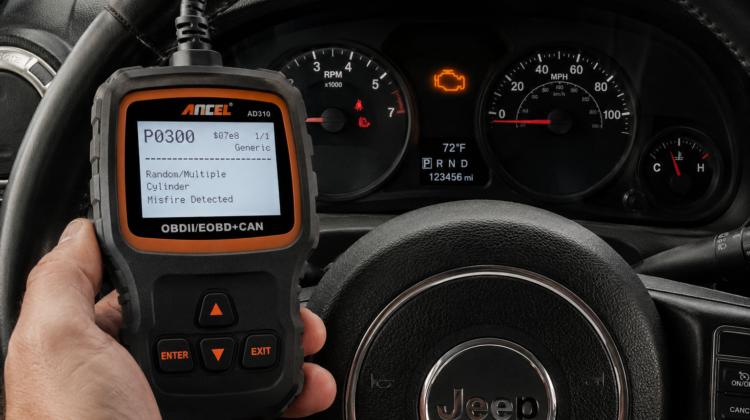
One of the easiest ways to identify jeep wrangler check engine light causes is by using an OBD-II scanner.
These scanners plug into the port located beneath the dashboard and retrieve diagnostic trouble codes.
Common Jeep Wrangler Codes
| Code | Possible Meaning |
|---|---|
| P0300 | Random misfire detected |
| P0420 | Catalytic converter efficiency issue |
| P0456 | Small EVAP leak |
| P0128 | Coolant thermostat issue |
| P0171 | Engine running lean |
Many auto parts stores will scan codes for free.
Can You Drive With the Check Engine Light On?
It depends on the severity of the issue.
Usually Safe for Short-Term Driving
- Loose gas cap
- Minor EVAP leaks
- Non-critical sensor issues
Stop Driving Immediately If You Notice:
- Flashing check engine light
- Severe shaking
- Smoke
- Overheating
- Major loss of power
Continuing to drive with serious engine problems can dramatically increase repair costs.
Preventing Future Check Engine Light Problems
Routine maintenance goes a long way toward reducing common Wrangler issues.
Smart Preventive Maintenance Tips
- Replace spark plugs on schedule
- Use quality fuel
- Inspect hoses regularly
- Keep sensors clean
- Address small problems early
- Avoid ignoring dashboard warnings
Wranglers built for off-road use often experience harsher wear conditions than typical SUVs, making maintenance even more important.
Shopping for a Reliable Jeep Wrangler
If your current Wrangler has become a constant repair project, it may be time to explore newer options. Browsing quality jeeps for sale can help you compare different Wrangler generations, trims, and mileage ranges before making your next move.
Some model years are known for stronger long-term reliability than others, so researching carefully pays off.
Final Thoughts
Understanding the most common jeep wrangler check engine light causes helps Wrangler owners make informed decisions before minor issues turn into expensive repairs.
Sometimes the solution is as simple as tightening a gas cap. Other times, the warning points to deeper engine or emissions problems that need immediate attention.
The key is avoiding guesswork. Use diagnostic tools, monitor symptoms carefully, and handle warning lights early rather than waiting for a breakdown on the trail—or worse, on the highway.
For Wrangler owners, a little preventative attention goes a long way toward keeping your Jeep adventure-ready year-round.
