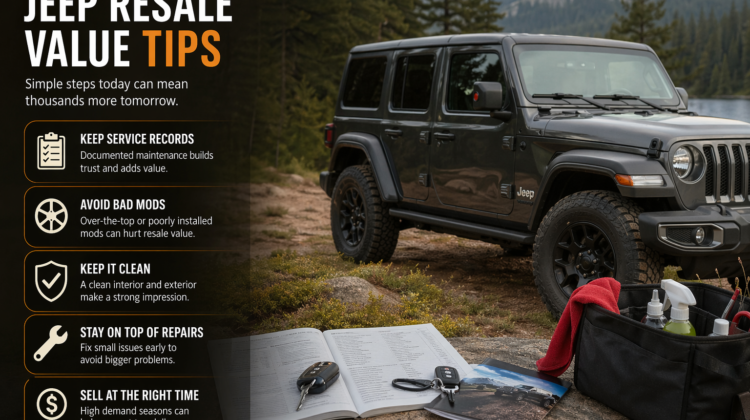
Jeep Resale Value Tips: How to Keep Your Jeep Worth More When It’s Time to Sell
Owning a Jeep isn’t just about off-road capability or rugged styling—it’s also a smart long-term investment if you know how to protect its value. Many owners unknowingly reduce their vehicle’s worth through neglect, poor modification choices, or missing documentation.
This guide compiles practical, field-tested jeep resale value tips that help you preserve (and sometimes increase) what your Jeep is worth when it’s time to sell or trade in.
Whether you drive a weekend trail rig or a daily commuter, these strategies apply across trims and model years.
Why Jeep Resale Value Is Naturally Strong
The Jeep Wrangler and other Jeep models historically retain value better than many SUVs because of:
- Strong enthusiast demand
- Proven off-road reputation
- Long vehicle lifespan
- High aftermarket support
- Recognizable brand identity from Jeep
But strong resale isn’t automatic. Owners who follow smart practices consistently get thousands more at sale time.
1. Keep Complete Service Records (This Matters More Than You Think)
A documented maintenance history is gold to buyers.
What to keep:
- Oil change receipts
- Tire rotations and alignments
- Brake service records
- Suspension and steering work
- Transmission and coolant service
A well-documented Jeep signals low risk, which increases buyer confidence and price.
Tip: Store digital copies. When listing among other jeeps for sale, documentation is often the deciding factor.
2. Avoid “Bad Mods” That Hurt Value
Not all modifications are equal.
Mods that usually help resale
- Quality lift kits (properly installed)
- All-terrain tires from reputable brands
- Roof racks and storage solutions
- Winch and recovery gear
- Professional lighting upgrades
Mods that often hurt resale
- Cheap spacers or poorly installed lifts
- Loud exhaust systems
- Excessive interior alterations
- DIY electrical wiring
- Unbranded accessories
Buyers want capability—not someone else’s experiment.
3. Protect the Interior Like It’s New
Jeep interiors age faster due to outdoor use. Prevent wear early.
- Use seat covers if you go off-road or to the beach
- Install all-weather floor mats
- Add smart storage solutions to prevent loose gear damage
- Keep plastics conditioned to prevent fading
A clean interior dramatically improves perceived value during inspection.
4. Don’t Ignore Undercarriage Care
Because Jeeps are used off-road, buyers will always check underneath.
After every trail ride:
- Rinse mud and salt
- Check for rust formation
- Inspect suspension components
- Repaint scratched skid plates if needed
A rust-free undercarriage can add significant resale appeal.
5. Keep It as Close to Stock as Possible
This is one of the most overlooked jeep resale value tips.
Even if you modify your Jeep:
- Keep original wheels
- Keep factory lights
- Keep stock bumper and parts
When selling, you can return it to stock and sell the mods separately for more money.
6. Maintain the Exterior Finish
Paint condition is a major pricing factor.
- Wax every 3–4 months
- Repair small chips early
- Avoid automatic car washes with brushes
- Protect fender flares from fading
Faded plastics and scratched paint suggest neglect—even if the Jeep runs perfectly.
7. Mileage Matters, But Condition Matters More
A high-mileage Jeep that is:
- Well maintained
- Rust-free
- Clean inside
- Properly serviced
…often sells for more than a lower-mileage Jeep that looks abused.
Buyers of Jeeps expect mileage. They don’t accept neglect.
8. Use Quality Parts for Repairs
When replacing parts, avoid the cheapest option.
Use:
- OEM or reputable aftermarket brands
- Professional installation when needed
Buyers often ask about parts used in repairs. Good parts justify a higher asking price.
9. Take Care of Storage and Cargo Areas
Scratched cargo panels, dented tailgates, and messy storage areas are common in used Jeeps.
Install:
- Cargo liners
- Storage organizers
- Tailgate protectors
These inexpensive additions preserve surfaces that are expensive to repair later.
10. Time Your Sale Strategically
Jeep demand increases during:
- Summer months
- Off-road season
- Pre-holiday travel periods
Listing at the right time can mean faster sales and stronger offers.
Final Thoughts
These jeep resale value tips aren’t complicated—but they require consistency. The difference between a Jeep that sells quickly at a premium price and one that sits unsold often comes down to how the owner treated it over the years.
A Jeep is built to last. If you maintain it with resale in mind from day one, you’ll benefit twice: once while driving it, and again when it’s time to sell.
