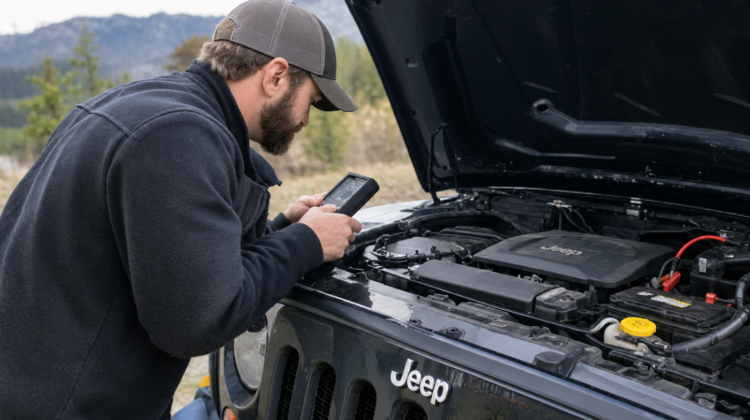
Jeep Wrangler Battery Keeps Dying? 9 Causes and How to Fix It
You charge your battery, jump-start your Jeep, and everything seems fine. Then, a day or two later, you turn the key or press the start button—and nothing happens. If your Jeep Wrangler battery keeps dying, replacing the battery again may not solve the problem.
A repeatedly dead battery usually points to an underlying issue. The battery could be worn out, the alternator might not be charging it properly, an electrical component may be draining power while the Jeep is parked, or a secondary battery could be causing trouble on certain models.
The good news is that you can narrow down the possibilities with a few basic checks before spending money on replacement parts.
In this guide, we’ll cover the most common reasons a Jeep Wrangler battery keeps dying, how to troubleshoot the problem, and when it’s time to seek professional help.
Why Does My Jeep Wrangler Battery Keep Dying?
There isn’t just one explanation for a repeatedly dead battery. The timing of the failure can provide a useful clue.
- Dead after sitting overnight: A parasitic electrical drain, weak battery, or charging problem may be responsible.
- Dead after several days of parking: Look for an accessory that remains powered, excessive standby draw, or a battery that’s losing its ability to hold a charge.
- Dead after short drives: The battery may not have enough time to recharge, especially if you frequently use electrical accessories.
- Dead even after installing a new battery: Check the charging system, electrical connections, and possible parasitic drain.
- Stop/Start system problems: On equipped Wranglers, the auxiliary battery may need testing along with the main battery.
The key is to identify why the battery is losing charge instead of repeatedly jump-starting the vehicle.
1. The Battery Is Old or Worn Out
A weak battery is one of the first things to investigate.
Car batteries gradually lose their ability to store energy. Heat, vibration, repeated deep discharges, and extended periods without a full recharge can accelerate battery deterioration.
A battery may still power the interior lights and dashboard but lack the current needed to start the engine.
Common signs of a failing battery
Watch for these symptoms:
- The engine cranks slowly.
- You hear clicking when trying to start the Jeep.
- Dashboard lights dim during startup.
- The battery repeatedly needs a jump-start.
- The battery struggles after the Jeep sits for a short period.
- The battery case is swollen, cracked, or leaking.
How to check it
Have the battery tested with a proper battery tester. A voltage reading alone doesn’t always reveal whether a battery can deliver enough current to start the engine.
A fully charged conventional 12-volt lead-acid battery often measures around 12.6 volts at rest, although the reading varies with battery chemistry, temperature, and state of charge.
A load or conductance test can provide more useful information about its starting capability.
What to do: If the battery fails testing, replace it with the correct specification for your Wrangler’s model year, engine, and equipment. If a relatively new battery fails, investigate why it discharged before installing another one.
2. The Alternator Isn’t Charging the Battery Properly
Your Jeep’s charging system replenishes the battery while the engine runs. If the alternator or its associated components aren’t working correctly, the battery may gradually lose charge even during normal driving.
Possible causes include:
- A failing alternator
- A loose or damaged drive belt
- Corroded electrical connections
- Damaged charging-system wiring
- A faulty voltage-control component
- Excessive electrical demand
Signs of a charging-system problem
You might notice a battery warning light, dimming lights, electrical accessories behaving strangely, or a Jeep that starts after charging but dies again during subsequent drives.
Some Wrangler models can also display a battery-saver message when the electrical system detects a low battery state of charge.
How to check it
Ask a mechanic to test the battery and charging system together. Depending on the Wrangler’s design, charging voltage may vary with battery condition, temperature, and electrical demand, so a single universal voltage threshold isn’t sufficient to diagnose every model.
Important: If the battery warning light remains illuminated while driving, or the vehicle displays persistent charging-system warnings, have the system inspected promptly.
3. A Parasitic Battery Drain Is Pulling Power While Parked
If your Jeep starts normally after charging but the battery is dead the next morning, a parasitic draw deserves attention.
A small amount of electrical consumption is normal while a vehicle is parked. Computers, security systems, and other modules may need standby power. The problem occurs when a component draws more current than the vehicle can tolerate during an extended parking period.
Potential culprits include:
- Aftermarket alarms
- Dash cameras wired to constant power
- Auxiliary LED lights
- Amplifiers and aftermarket stereos
- USB adapters and plugged-in accessories
- A glove-box or interior light that stays on
- A control module that doesn’t enter sleep mode
- Faulty electrical components
How to investigate a parasitic drain
Start with the simple checks:
- Remove chargers, adapters, and other accessories from the power outlets.
- Check that interior lights and aftermarket lights switch off completely.
- Review recently installed electrical accessories.
- Fully close the doors and tailgate.
- Have a technician measure the vehicle’s key-off current draw after the modules have entered their normal sleep state.
A professional may use a current clamp, multimeter, or other diagnostic equipment to isolate the circuit responsible.
Avoid disconnecting a battery cable or inserting a meter into a high-current circuit without knowing the correct procedure. An incorrect test setup can damage equipment or cause injury.
4. The Auxiliary Battery Is Failing
This is an important possibility on Jeep Wranglers equipped with the Engine Stop/Start system.
Certain Wrangler configurations use both a main battery and a supplemental battery. The supplemental battery helps support the Stop/Start system and the vehicle’s 12-volt electrical system.
Jeep owner documentation identifies the secondary battery location behind the front passenger-side wheel well on applicable models. It also warns that both the main and supplemental batteries must be disconnected to fully de-energize the 12-volt system on equipped vehicles. See the Jeep Wrangler owner’s manual for model-specific guidance.
Symptoms of a possible auxiliary-battery problem
You may experience:
- Stop/Start system warnings
- A Stop/Start feature that becomes unavailable
- Repeated low-voltage symptoms
- Starting problems that return after the main battery has been replaced
These symptoms don’t prove the auxiliary battery is defective, but they make it worth testing.
Should you replace both batteries?
Not automatically. Have both batteries tested and follow the service procedure for your particular Wrangler. A failed auxiliary battery can affect the electrical system, but the main battery, charging system, and wiring may also contribute to the problem.
Because some configurations have multiple batteries and an intelligent battery sensor, professional diagnosis is advisable if you’re unfamiliar with the system.
5. Corroded or Loose Battery Connections
Sometimes the battery itself is healthy, but electricity can’t flow reliably through its connections.
Corrosion can build up around the terminals, while vibration can loosen connections over time. Damaged cables or poor grounds can also cause starting problems that resemble a dead battery.
What to inspect
With the vehicle switched off, visually check for:
- White, blue, or greenish deposits around terminals
- Loose battery clamps
- Damaged or frayed cables
- Corrosion near ground connections
- Signs of overheating or melted insulation
Don’t touch a damaged or leaking battery, and avoid using metal tools in a way that could bridge the positive terminal to the vehicle body.
If the terminals are damaged or the cables are badly corroded, have them serviced properly.
A new battery won’t fix a poor electrical connection. The connections should be checked whenever a battery is replaced.
6. Your Driving Habits Don’t Give the Battery Enough Time to Recharge
Frequent short trips can contribute to a low battery charge.
Starting the engine uses electrical energy. The charging system then needs enough operating time to replenish it while also powering the vehicle’s electrical equipment.
If you mostly drive short distances, spend time in heavy traffic, or leave the Jeep parked for long stretches between trips, the battery may remain undercharged.
The problem can become more noticeable when you regularly use:
- Heated accessories
- High-powered audio systems
- Auxiliary lighting
- Dash cameras
- Refrigerators or camping equipment
- Other electrical accessories
How to prevent it
- Avoid repeatedly starting the Jeep for very short runs when possible.
- Unplug accessories that don’t need to remain powered.
- Use a compatible smart battery maintainer if the Jeep is parked for extended periods.
- Have the battery fully charged and tested if it has been deeply discharged.
Don’t rely on idling for a few minutes to restore a heavily discharged battery. A suitable charger may be needed, followed by a battery and charging-system test.
7. An Aftermarket Accessory Is Draining the Battery
Wranglers are popular platforms for customization. Extra lights, winches, radios, amplifiers, dash cameras, and camping equipment can make the vehicle more useful—but incorrect wiring can cause battery problems.
An accessory may be wired directly to constant battery power rather than a suitable switched circuit. Some devices also continue drawing current when they appear to be turned off.
What to do
If the battery started dying after you installed a new accessory, investigate that installation first.
Check:
- Whether the device is wired to constant or ignition-switched power
- Whether its standby current is within specification
- Whether the wiring or relay is damaged
- Whether the accessory manufacturer specifies a battery cutoff or low-voltage protection
- Whether the installation has affected other electrical circuits
For high-current equipment, such as winches or powerful audio systems, have the wiring, fusing, and charging-system capacity checked by a qualified installer.
Don’t randomly remove fuses to solve the problem. A technician can use a systematic circuit-isolation procedure to find the cause without creating additional electrical faults.
8. The Jeep Sits Too Long Without Being Driven
A Wrangler that sits unused for weeks can develop a low battery, particularly if the battery is already aging or accessories continue drawing power.
Even when the vehicle is switched off, some systems may use a small amount of electricity.
Jeep’s 2024 Wrangler owner’s manual recommends measures to minimize battery drain during extended storage, including disconnecting the negative cable when storing the vehicle for more than three weeks. For Stop/Start-equipped models, it specifies that both main and supplemental negative battery connections must be addressed to fully de-energize the system. Follow the manual for your exact vehicle rather than applying a generic procedure. Source: Jeep Wrangler owner’s manual.
Better options for long-term storage
If you don’t plan to drive your Jeep regularly:
- Make sure the battery is fully charged before storage.
- Use a compatible automatic battery maintainer when a suitable power source is available.
- Check the battery condition periodically.
- Remove accessories that don’t need to stay connected.
- Follow the owner’s manual for battery disconnection and storage.
If you choose to disconnect the battery, understand that doing so can affect vehicle settings and electronic systems. On equipped models, disconnecting only the main battery may not fully de-energize the 12-volt system.
Hybrid and plug-in hybrid models have additional requirements, so use their specific storage instructions.
9. A Battery Sensor or Electrical Module Is Malfunctioning
Modern Wranglers rely on electronic modules and battery-monitoring systems to manage electrical demand.
A faulty sensor, wiring problem, or module that remains awake when it should sleep can contribute to battery-drain symptoms.
Some Wrangler models use an Intelligent Battery Sensor (IBS). The owner’s manual warns against disconnecting the sensor itself during the specified battery-isolation procedure, as this can affect Stop/Start operation.
When should you suspect an electronic issue?
Consider professional diagnosis if:
- The battery and alternator both test correctly.
- The battery continues to discharge while parked.
- You see recurring electrical warnings.
- The problem began after electrical work or an accessory installation.
- The vehicle has intermittent starting or module-related issues.
A technician can scan the vehicle for diagnostic trouble codes and test key-off current draw. If a module is staying awake, the next step is to identify why rather than replacing electronic components at random.
How to Troubleshoot a Jeep Wrangler Battery That Keeps Dying
Use this sequence to narrow down the cause.
Step 1: Identify When the Battery Dies
Does it fail overnight, after a few days, or only after short drives?
The timing helps distinguish a possible parasitic drain from a weak battery or charging problem.
Step 2: Inspect the Battery
Look for visible damage, corrosion, loose clamps, or damaged cables. If the battery is swollen, leaking, or unusually hot, don’t attempt to jump-start it.
Step 3: Test the Battery
Have the battery charged and tested using equipment appropriate for its type. If the Jeep has an auxiliary battery, test that battery as well.
Step 4: Check the Charging System
Test the alternator and related wiring. A battery that isn’t being recharged properly will eventually run down again.
Step 5: Check Accessories and Key-Off Draw
Unplug accessories and review recent modifications. If the battery still drains while parked, arrange a parasitic-draw test.
Step 6: Scan for Electrical Faults
If the basic tests don’t reveal the problem, scan the vehicle and check for battery-monitoring, charging, or module-related faults.
Step 7: Confirm the Repair
After the underlying issue is corrected, fully recharge the battery and retest the vehicle. Simply jump-starting the Jeep isn’t proof that the problem has been fixed.
Jeep Wrangler Battery Keeps Dying After Replacement: What Now?
If you’ve installed a new battery and the Jeep still won’t hold a charge, don’t assume the replacement battery is defective.
Work through these possibilities:
| Possible Cause | What to Check |
|---|---|
| Faulty alternator or charging system | Charging-system test and wiring inspection |
| Parasitic drain | Key-off current draw after modules enter sleep mode |
| Auxiliary battery failure | Test both batteries on equipped models |
| Poor connections | Battery terminals, grounds, and cable condition |
| Aftermarket accessory | Wiring, relays, and standby current |
| Defective replacement battery | Proper charging and battery load/conductance test |
| Electronic fault | Diagnostic scan and circuit testing |
The most effective approach is to test the battery, charging system, and electrical draw together. Replacing components one at a time without diagnosis can quickly become expensive.
How Long Should a Jeep Wrangler Battery Last?
Battery life varies with climate, battery type, driving patterns, maintenance, and electrical demand.
Hot climates can accelerate battery aging, while repeated deep discharges can shorten service life. Long periods of inactivity and frequent short trips may also contribute to poor battery condition.
Rather than replacing a battery based on age alone, have it tested when you notice slow cranking, repeated discharge, or other starting problems.
If the battery is relatively new but keeps dying, look for an underlying charging or electrical issue.
Frequently Asked Questions
Why does my Jeep Wrangler battery die overnight?
A battery that dies overnight may be weak, undercharged, or affected by excessive key-off electrical draw. Start with a battery test and charging-system check. If both pass, have a technician test for parasitic drain.
Why does my Jeep Wrangler battery keep dying after a jump-start?
A jump-start provides enough power to start the engine, but it doesn’t correct the cause of the discharge. The battery may be failing, the charging system may be faulty, or an electrical component may be drawing power while parked.
Can a bad auxiliary battery drain the main battery?
On Wranglers equipped with a supplemental battery, a fault in the Stop/Start battery system can contribute to electrical and starting problems. Both batteries and the associated system should be tested before deciding which component to replace.
Can an alternator cause a dead battery?
Yes. If the charging system doesn’t replenish the battery properly, the battery can become discharged even when the Jeep is driven regularly.
Will disconnecting the battery stop the drain?
Disconnecting a battery may prevent certain vehicle loads from consuming power, but it doesn’t repair the underlying fault. It can also affect electronic settings and systems. Follow the correct model-specific procedure, especially on Stop/Start-equipped and hybrid Wranglers.
Should I replace the battery if it keeps dying?
Replace it if proper testing shows that it has failed. If the battery tests healthy or the replacement battery also discharges, investigate the charging system, electrical connections, auxiliary battery, and parasitic draw.
Can aftermarket lights cause battery drain?
Yes. Auxiliary lights, dash cameras, audio systems, alarms, and other accessories can consume power while the vehicle is parked if they’re wired incorrectly or draw excessive standby current.
Final Thoughts
When your Jeep Wrangler battery keeps dying, the solution isn’t always another battery. A worn-out battery is one possibility, but charging-system faults, parasitic electrical drain, poor connections, aftermarket accessories, long storage periods, and auxiliary-battery issues can produce similar symptoms.
Start with a battery test, inspect the connections, and check the charging system. If those tests don’t explain the problem, a parasitic-draw test and diagnostic scan can help identify the underlying fault.
Fixing the cause—not just charging the battery—will help your Wrangler start reliably and reduce the risk of getting stranded.
If you’re researching your next Jeep, browse available Jeeps for sale and use the same careful approach when inspecting a vehicle’s battery, charging system, and maintenance history.
Quick Battery Troubleshooting Checklist
- Check the battery condition and age.
- Inspect the terminals and ground connections.
- Test the battery under appropriate conditions.
- Test the alternator and charging system.
- Check the auxiliary battery if equipped.
- Unplug unnecessary accessories.
- Investigate parasitic electrical draw.
- Scan for electrical-system faults if the problem persists.
- Fully charge and retest the battery after repairs.

Leave a Reply