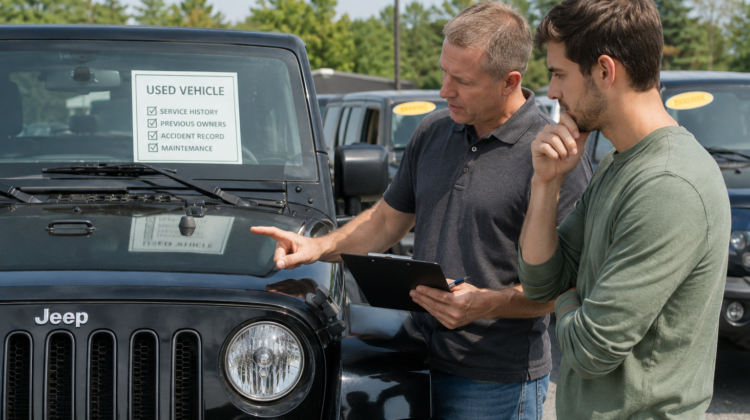
Questions to Ask Before Buying a Used Jeep: A Smart Buyer’s Complete Checklist
Shopping for a pre-owned Jeep can be exciting, whether you’re looking for a capable off-roader, a dependable daily driver, or a vehicle built for weekend adventures. However, not every used Jeep offers the same value. Knowing the Questions to ask before buying a used Jeep can help you avoid expensive surprises and make a confident purchase.
From maintenance history to off-road wear and tear, asking the right questions gives you valuable insight into the vehicle’s condition and long-term reliability. This guide covers the most important Questions to ask before buying a used Jeep, so you’ll know exactly what to look for before signing the paperwork.
Why Asking the Right Questions Matters
Jeeps are known for their rugged capability, but many have been used for off-roading, towing, or other demanding activities. While that’s not necessarily a bad thing, it’s important to understand how the vehicle has been treated throughout its life.
A few thoughtful questions can reveal:
- Hidden mechanical problems
- Poor maintenance habits
- Previous accidents
- Costly future repairs
- Whether the asking price is fair
The more information you gather, the easier it becomes to determine whether a used Jeep is worth buying.
1. Why Is the Jeep Being Sold?
This simple question often provides valuable context.
Common answers include:
- Upgrading to a newer vehicle
- No longer needing an SUV
- Moving to a different location
- Financial reasons
Be cautious if the seller seems reluctant to answer or gives inconsistent explanations.
2. Has the Jeep Ever Been in an Accident?
Accident history doesn’t automatically rule out a purchase, but you should know:
- What happened?
- Which parts were repaired?
- Were OEM parts used?
- Who completed the repairs?
Request documentation whenever possible.
3. Can You Show the Maintenance Records?
One of the most important Questions to ask before buying a used Jeep concerns maintenance.
Look for evidence of regular:
- Oil changes
- Brake service
- Tire rotations
- Differential fluid changes
- Transmission service
- Cooling system maintenance
A well-documented service history usually indicates responsible ownership.
4. Has It Been Used for Off-Roading?
Many Jeep owners enjoy trails, mud, and rock crawling.
Ask:
- How often was it taken off-road?
- What type of terrain was driven?
- Was it cleaned after each trip?
- Were suspension components inspected regularly?
Light recreational use isn’t necessarily harmful, but frequent extreme off-roading can accelerate wear.
5. Has the Jeep Been Modified?
Modifications can improve capability—or create future problems.
Ask about:
- Lift kits
- Oversized tires
- Aftermarket bumpers
- Suspension upgrades
- Lighting
- Engine tuning
- Winches
Request receipts for professional installations whenever possible.
6. Does Everything Work Properly?
Before buying, test every major feature.
Check:
- Air conditioning
- Heater
- Windows
- Door locks
- Touchscreen
- Navigation
- Backup camera
- Four-wheel drive system
- Cruise control
- Bluetooth connectivity
Small electrical issues can become expensive repairs later.
7. Are There Any Warning Lights?
Modern Jeeps use onboard diagnostics to detect problems.
If warning lights are illuminated, ask:
- What caused them?
- Has the issue been diagnosed?
- Was it repaired?
- Can you provide repair invoices?
Never ignore a Check Engine Light.
8. Has the Jeep Ever Had Water Damage?
Flood damage can affect:
- Electronics
- Wiring
- Sensors
- Interior materials
- Corrosion resistance
Watch for:
- Musty odors
- Damp carpets
- Rust under seats
- Water stains
9. What Repairs Have Been Completed Recently?
Recent repairs may include:
- New brakes
- Suspension work
- Tires
- Battery replacement
- Water pump
- Radiator
- Alternator
Knowing what’s already been replaced helps estimate future maintenance costs.
10. Are the Tires the Same Brand and Size?
Uneven tire wear can indicate:
- Alignment issues
- Suspension problems
- Improper maintenance
Check:
- Tread depth
- Tire age
- Matching tire brands
- Even wear patterns
11. Does the Four-Wheel Drive Engage Correctly?
A Jeep’s 4WD system is one of its biggest selling points.
Test:
- 2H
- 4H
- 4L (when appropriate)
Listen for unusual noises and ensure shifting feels smooth.
12. Is There Any Rust?
Rust deserves careful attention.
Inspect:
- Frame rails
- Undercarriage
- Suspension mounts
- Floor pans
- Wheel wells
- Door hinges
Surface rust may be manageable, but structural rust can be a deal-breaker.
13. Has the Title Always Been Clean?
Ask whether the Jeep has:
- A clean title
- Salvage title
- Rebuilt title
- Flood title
A clean title generally offers greater resale value and fewer insurance complications.
14. Can I Take It for an Independent Inspection?
A trustworthy seller should have no problem allowing a pre-purchase inspection.
A qualified mechanic can evaluate:
- Engine health
- Suspension
- Steering
- Brakes
- Transmission
- Leaks
- Frame condition
This small investment can save thousands in unexpected repairs.
15. Can I Take a Long Test Drive?
A quick drive around the block isn’t enough.
Drive on:
- City streets
- Highways
- Rough pavement
- Parking lots
Listen for:
- Suspension noises
- Steering vibration
- Brake pulsation
- Wind noise
- Transmission shifting issues
Pay attention to how the Jeep feels during acceleration, braking, and cornering.
Bonus Tips Before Buying a Used Jeep
In addition to asking the right questions:
- Compare prices with similar models.
- Review the vehicle history report.
- Verify the VIN matches all paperwork.
- Research common issues for the specific model year.
- Don’t rush into a purchase.
Patience often leads to finding a better vehicle at a better price.
Finding the Right Used Jeep
If you’re ready to begin your search, browsing a wide selection of jeeps for sale can help you compare different models, trims, prices, and features in one place. Explore available inventory at https://www.jeepsforsale.autos/jeep-for-sale/ to find a Jeep that fits your budget and driving needs.
Whether you’re interested in a Wrangler, Gladiator, Grand Cherokee, Cherokee, or Compass, comparing multiple listings makes it easier to identify the best value.
Final Thoughts
Knowing the Questions to ask before buying a used Jeep can dramatically improve your chances of purchasing a dependable vehicle that delivers years of enjoyment. From reviewing maintenance records and accident history to inspecting the four-wheel-drive system and checking for rust, every question brings you one step closer to making an informed decision.
A used Jeep can be an outstanding investment when it’s been well cared for. Take your time, ask detailed questions, arrange a professional inspection, and don’t be afraid to walk away if something doesn’t feel right. With careful research and patience, you’ll be well on your way to finding the Jeep that’s ready for your next adventure.
