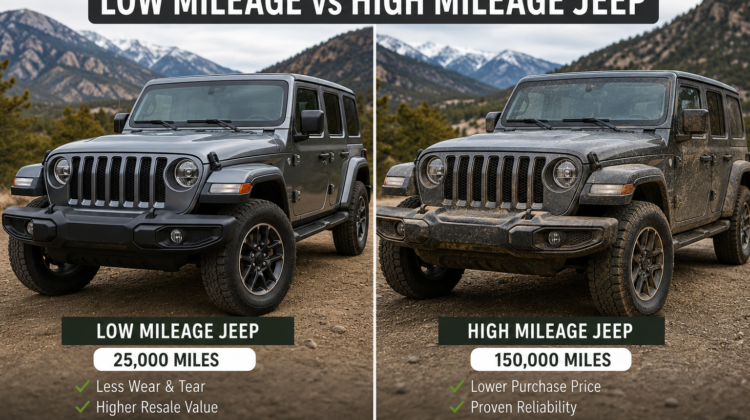
Low Mileage vs High Mileage Jeep: Which Is the Better Buy?
When shopping for a used Jeep, one of the biggest questions buyers face is low mileage vs high mileage Jeep. At first glance, the answer seems obvious—lower mileage should always be better, right? In reality, the decision is far more nuanced.
A well-maintained Jeep with 120,000 miles may provide years of dependable service, while a neglected model with only 40,000 miles could become a money pit. Understanding what mileage actually tells you—and what it doesn’t—can help you make a smarter purchase.
If you’re currently exploring Jeeps for sale, browse available inventory here: https://www.jeepsforsale.autos/jeep-for-sale/
Does Mileage Really Matter?
Mileage is an important factor because it reflects how much wear a vehicle has experienced over time. Components such as the suspension, drivetrain, brakes, and engine naturally age with use.
However, mileage is only one piece of the puzzle. Equally important are:
- Maintenance records
- Driving conditions
- Previous ownership history
- Accident reports
- Rust and corrosion
- Quality of repairs and modifications
A Jeep that spent most of its life cruising highways may be in better shape than one with significantly fewer miles that endured years of off-road abuse.
Benefits of Buying a Low Mileage Jeep
Choosing a low-mileage vehicle comes with several potential advantages.
1. Less Mechanical Wear
Critical components like the engine and transmission have typically experienced fewer operating hours, reducing the likelihood of immediate repairs.
2. Better Interior Condition
Seats, steering wheels, pedals, and electronics often show less wear in lower-mileage vehicles.
3. Stronger Resale Value
Future buyers generally favor vehicles with fewer miles, helping preserve resale prices.
4. Potential Warranty Coverage
Some newer Jeeps with lower mileage may still qualify for factory or extended warranty protection.
Advantages of a High Mileage Jeep
Surprisingly, a high-mileage Jeep can also be an excellent purchase.
Proven Reliability
If a Jeep has reached 150,000 miles while receiving regular maintenance, it demonstrates durability rather than weakness.
Lower Purchase Price
Higher-mileage models often cost thousands less than similar low-mileage examples, making them attractive for budget-conscious buyers.
More Value for Enthusiasts
Drivers planning extensive off-road adventures may worry less about adding miles to an already well-used vehicle.
Low Mileage vs High Mileage Jeep: Key Factors to Compare
When evaluating low mileage vs high mileage Jeep options, focus on these criteria:
| Factor | Low Mileage Jeep | High Mileage Jeep |
|---|---|---|
| Purchase Price | Higher | Lower |
| Immediate Repair Risk | Generally lower | Depends on maintenance |
| Depreciation | Faster initially | Slower |
| Insurance Value | Often higher | Usually lower |
| Resale Appeal | Strong | Varies |
| Maintenance History Importance | High | Extremely high |
Why Maintenance History Beats Mileage Alone
A complete service history can outweigh the odometer reading.
Look for evidence of:
- Regular oil changes
- Transmission servicing
- Brake maintenance
- Differential fluid replacement
- Cooling system inspections
- Tire rotations
- Suspension repairs
Documentation demonstrates responsible ownership and often predicts future reliability better than mileage alone.
Jeep Wranglers Are Built for Longevity
One reason buyers continue choosing Wranglers is their reputation for durability.
Many properly maintained Jeeps exceed 200,000 miles while remaining capable daily drivers or weekend trail rigs. Their body-on-frame construction and widespread aftermarket support make repairs relatively straightforward compared with many crossovers.
That means the debate over low mileage vs high mileage Jeep often comes down to condition rather than a single number on the dashboard.
Questions to Ask Before Buying
Before committing to any used Jeep, ask:
- Has it been involved in any accidents?
- Was it used for heavy off-roading or towing?
- Are maintenance records available?
- Has rust been professionally addressed?
- Have major components like the transmission or suspension been replaced?
- Has the vehicle passed a recent inspection?
These answers provide valuable context that mileage alone cannot.
Red Flags to Watch For
Regardless of odometer reading, exercise caution if you notice:
- Inconsistent service records
- Excessive underbody rust
- Fluid leaks
- Uneven tire wear
- Dashboard warning lights
- Poor-quality lift kit installations
- Evidence of flood damage
Even a low-mileage Jeep with these issues could require expensive repairs.
Which Option Is Right for You?
The best choice depends on your goals.
A low-mileage Jeep may be ideal if you:
- Want maximum longevity
- Prefer fewer maintenance concerns
- Plan to keep the vehicle for many years
- Value resale potential
A high-mileage Jeep may make sense if you:
- Have a limited budget
- Can verify meticulous maintenance
- Enjoy performing your own repairs
- Need an affordable off-road vehicle
Final Thoughts
When considering low mileage vs high mileage Jeep, avoid making a decision based solely on the odometer. A clean maintenance history, thorough inspection, and evidence of responsible ownership often matter far more than an arbitrary mileage threshold.
Take the time to compare condition, service records, and pricing, and you’ll be much more likely to find a Jeep that delivers years of dependable adventures—whether it has 50,000 miles or 150,000 miles on the clock.
