Jeep Wrangler Bolt Pattern: Everything You Need to Know Before Upgrading Your Wheels
If you’re planning to install new wheels or tires, one of the first specifications you need to verify is the Jeep Wrangler bolt pattern. Choosing wheels with the wrong bolt pattern can lead to poor fitment, unsafe driving conditions, and unnecessary expenses.
Whether you’re upgrading for off-road performance, improving your Wrangler’s appearance, or replacing factory wheels, understanding the correct bolt pattern is essential. This guide explains everything you need to know, including bolt pattern measurements, compatibility between model years, wheel offset considerations, and tips for selecting the perfect aftermarket wheels.
What Is a Jeep Wrangler Bolt Pattern?
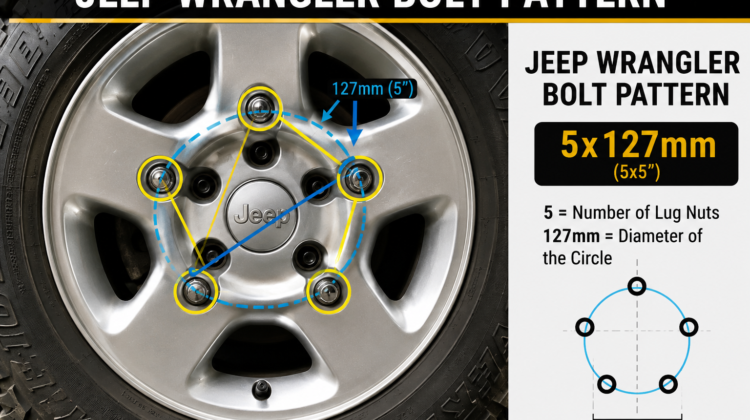
A Jeep Wrangler bolt pattern refers to the number of wheel studs and the diameter of the imaginary circle they create.
Bolt patterns are typically written like this:
5×127
This means:
- 5 wheel studs (lug nuts)
- 127 mm (5 inches) bolt circle diameter
The bolt pattern determines whether a wheel can safely mount to your Wrangler’s hub.
Jeep Wrangler Bolt Pattern by Model Year
Fortunately, modern Jeep Wranglers share the same bolt pattern, making wheel upgrades much easier.
| Jeep Wrangler Generation | Model Years | Bolt Pattern |
|---|---|---|
| YJ | 1987–1995 | 5×114.3 (5×4.5″) |
| TJ | 1997–2006 | 5×114.3 (5×4.5″) |
| JK | 2007–2018 | 5×127 (5×5″) |
| JL | 2018–Present | 5×127 (5×5″) |
| Gladiator JT | 2020–Present | 5×127 (5×5″) |
If you own a JK or JL Wrangler, finding compatible aftermarket wheels is relatively straightforward because 5×127 has become one of the most popular SUV bolt patterns.
Why the Bolt Pattern Matters
Even if a wheel looks like it will fit, the bolt pattern must match perfectly.
Installing wheels with an incorrect bolt pattern can result in:
- Excessive vibration
- Loose lug nuts
- Uneven tire wear
- Hub damage
- Unsafe driving conditions
Never attempt to force mismatched wheels onto your Jeep.
How to Measure a Jeep Wrangler Bolt Pattern
If you’re unsure about your Wrangler’s specifications, you can measure it yourself.
For a 5-lug wheel:
- Locate any wheel stud.
- Measure to the farthest edge of the opposite stud.
- Record the distance.
For most JK and JL Wranglers, you’ll measure approximately 127 mm (5 inches).
Bolt Pattern vs Wheel Offset
Many Jeep owners confuse bolt pattern with wheel offset, but they’re completely different specifications.
Bolt Pattern
Determines whether the wheel mounts to the hub.
Wheel Offset
Determines how far the wheel sits inward or outward.
A wheel can have the correct Jeep Wrangler bolt pattern but still rub against suspension components if the offset isn’t suitable.
What Is the Center Bore?
Another important specification is the center bore.
The center bore fits over the hub and helps properly center the wheel.
Aftermarket wheels often use larger center bores and require hub-centric rings to ensure a precise fit.
Popular Wheel Sizes for Jeep Wranglers
Many owners upgrade beyond the factory wheels.
Common sizes include:
- 17×8.5
- 17×9
- 18×9
- 20×9
Popular tire combinations include:
- 33-inch tires
- 35-inch tires
- 37-inch tires
Before upgrading, make sure your suspension, lift height, and wheel offset are compatible.
Can You Swap Wheels Between Wrangler Generations?
Sometimes.
Compatible
- JK ↔ JL
- JL ↔ Gladiator JT
These vehicles all use the 5×127 Jeep Wrangler bolt pattern.
Not Directly Compatible
Older models like:
- YJ
- TJ
use 5×114.3, meaning wheels won’t bolt directly onto newer Wranglers without adapters.
Choosing Aftermarket Wheels
When shopping for wheels, verify all of these specifications:
- Bolt pattern
- Wheel diameter
- Wheel width
- Offset
- Backspacing
- Center bore
- Load rating
Never select wheels based solely on appearance.
Should You Use Wheel Adapters?
Wheel adapters allow you to install wheels with different bolt patterns.
They can work well when:
- Properly manufactured
- Correctly torqued
- Installed according to manufacturer specifications
However, adapters add another mechanical component that requires periodic inspection.
For dedicated off-road vehicles, wheels with the correct Jeep Wrangler bolt pattern are generally the better long-term solution.
Signs Your Wheels Don’t Fit Properly
Watch for these symptoms after installing new wheels:
- Steering wheel vibration
- Clicking noises
- Uneven tire wear
- Lug nuts loosening
- Poor handling
- Brake caliper interference
If you notice any of these issues, stop driving until the fitment has been verified.
Frequently Asked Questions
Is every Jeep Wrangler bolt pattern the same?
No.
YJ and TJ Wranglers use 5×114.3, while JK, JL, and Gladiator models use 5×127.
Can I install Gladiator wheels on my Wrangler?
Yes.
Most Gladiator wheels fit JK and JL Wranglers because they share the same 5×127 bolt pattern.
Are wheel spacers the same as adapters?
No.
Wheel spacers move the wheel outward while keeping the same bolt pattern.
Adapters change the bolt pattern to allow different wheels to fit.
Do aftermarket wheels affect off-road performance?
They can.
Proper wheel width, offset, and weight all influence handling, suspension travel, and tire clearance.
Storage Tips for Your Factory Wheels
If you’re upgrading your wheels, don’t forget to properly store your originals.
Good storage practices include:
- Clean wheels before storing.
- Keep them indoors whenever possible.
- Stack tires horizontally or use a tire rack.
- Cover them to prevent dust buildup.
- Label each wheel by position for easier seasonal rotation.
Proper storage helps preserve your factory wheels if you ever decide to reinstall them or sell your Jeep.
Looking for Your Next Jeep?
If you’re considering upgrading to a newer Wrangler or adding another Jeep to your garage, explore the latest at Jeeps for sale. You’ll find a wide selection of Wrangler, Gladiator, Cherokee, Grand Cherokee, Compass, and other Jeep models to suit every lifestyle and budget.
Final Thoughts
Knowing your Jeep Wrangler bolt pattern is essential before purchasing new wheels or tires. While the bolt pattern is only one part of proper wheel fitment, it’s arguably the most important. Pair it with the correct offset, backspacing, center bore, and tire size, and you’ll enjoy improved performance, enhanced safety, and a more personalized look for your Wrangler.
Whether you’re preparing for rugged trails or simply refreshing your Jeep’s appearance, taking the time to verify wheel specifications ensures your investment performs exactly as intended.
