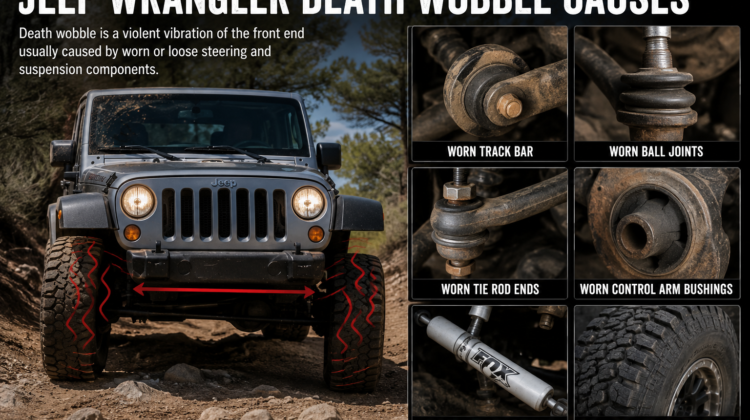
Jeep Wrangler Death Wobble Causes: What Every Jeep Owner Should Know
If you’ve spent any time in the Jeep community, you’ve probably heard the term “death wobble.” While it sounds dramatic, it describes a very real issue that can affect solid front axle vehicles, including the Jeep Wrangler. Understanding the Jeep Wrangler death wobble causes is essential for maintaining your vehicle’s safety, handling, and overall performance.
Death wobble isn’t a problem that should be ignored. Although it doesn’t mean your Jeep is unsafe by design, it usually indicates that one or more steering or suspension components need attention.
In this guide, we’ll explain the most common Jeep Wrangler death wobble causes, how to diagnose the issue, and what you can do to prevent it from happening.
What Is Jeep Death Wobble?
Death wobble is a violent oscillation of the front wheels and steering components that typically occurs after hitting a bump or pothole at moderate to highway speeds.
Symptoms include:
- Rapid shaking of the steering wheel
- Front axle vibration
- Difficulty maintaining control
- Needing to slow down significantly before the shaking stops
Although the experience can be alarming, the wobble itself is usually the result of worn or loose components rather than a single defective part.
What Causes Jeep Wrangler Death Wobble?
Many people mistakenly believe that one component alone causes death wobble.
In reality, it’s usually a combination of worn parts, improper alignment, and loose steering components.
Let’s look at the most common Jeep Wrangler death wobble causes.
1. Worn Track Bar
The track bar is one of the most common contributors.
Its job is to keep the front axle centered beneath the Jeep.
If the bushings wear out or the mounting bolts become loose, the axle can shift from side to side, creating the conditions for death wobble.
Signs of a Bad Track Bar
- Clunking noises
- Loose steering feel
- Visible movement during steering
- Worn bushings
Always inspect both the bushings and mounting brackets.
2. Loose or Worn Ball Joints
Ball joints connect the steering knuckles to the axle and allow smooth steering movement.
Over time they wear, especially on Jeeps that frequently travel off-road or use oversized tires.
Symptoms include:
- Steering wander
- Uneven tire wear
- Excessive wheel movement
- Clicking or popping noises
Replacing worn ball joints often restores steering precision.
3. Improper Wheel Alignment
Alignment plays a significant role in preventing front-end instability.
Incorrect settings can amplify vibrations.
Pay particular attention to:
- Caster angle
- Toe alignment
- Camber (where applicable)
Many lifted Jeeps require alignment adjustments after suspension modifications.
4. Unbalanced or Damaged Tires
One of the easiest Jeep Wrangler death wobble causes to overlook is tire condition.
Problems include:
- Missing wheel weights
- Bent wheels
- Uneven tire wear
- Mud packed inside wheels
- Out-of-round tires
Always balance tires after installation or whenever unusual vibration develops.
5. Worn Tie Rod Ends
Tie rods transfer steering input from the steering box to the wheels.
Loose tie rod ends create excessive play that allows unwanted movement.
Inspect for:
- Torn dust boots
- Grease leakage
- Vertical movement
- Side-to-side looseness
Even slight wear can contribute to front-end instability.
6. Steering Damper Problems
The steering stabilizer (often called the steering damper) is commonly blamed for death wobble.
However, it usually isn’t the root cause.
Instead, it masks existing problems by reducing vibration.
If your Jeep develops death wobble shortly after replacing the steering stabilizer, another suspension or steering component is almost certainly worn.
7. Control Arm Bushings
Control arms help position the front axle while allowing suspension movement.
Worn bushings can cause:
- Excessive axle movement
- Poor alignment
- Increased steering vibration
Inspect both upper and lower control arms regularly, especially on high-mileage Wranglers.
8. Loose Suspension Hardware
After years of driving—or following suspension modifications—bolts can loosen.
Always inspect:
- Track bar bolts
- Control arm bolts
- Steering box mounting bolts
- Sway bar links
- Shock mounts
Even a single loose fastener can contribute to steering instability.
9. Lift Kits Without Proper Geometry Correction
Lifting a Wrangler improves ground clearance but also changes suspension geometry.
Without correcting caster angle and steering geometry, the risk of front-end vibration increases.
Quality lift kits typically include:
- Adjustable control arms
- Track bar relocation brackets
- Adjustable track bars
- Geometry correction components
Avoid inexpensive lift kits that don’t properly address suspension angles.
10. Oversized Tires
Larger tires place additional stress on steering components.
They increase leverage on:
- Ball joints
- Tie rods
- Wheel bearings
- Steering box
If you’ve upgraded to larger tires, inspect steering components more frequently.
How to Diagnose Death Wobble
If your Jeep experiences front-end shaking, inspect the vehicle methodically.
Start by checking:
- Tire pressure
- Tire balance
- Track bar bushings
- Track bar bolts
- Ball joints
- Tie rod ends
- Drag link
- Wheel bearings
- Control arm bushings
- Alignment
It’s common to discover multiple worn components contributing to the problem.
How to Prevent Jeep Wrangler Death Wobble
Fortunately, most Jeep Wrangler death wobble causes can be prevented through regular maintenance.
Best practices include:
- Rotate tires regularly.
- Balance wheels when necessary.
- Inspect suspension after off-road trips.
- Torque suspension bolts to factory specifications.
- Replace worn bushings promptly.
- Perform wheel alignments after suspension modifications.
- Use quality replacement parts.
Preventative maintenance is almost always less expensive than repairing extensive suspension damage later.
Should You Keep Driving If You Experience Death Wobble?
If death wobble occurs:
- Hold the steering wheel firmly.
- Avoid sudden steering corrections.
- Gradually slow down.
- Pull over safely.
- Inspect the vehicle before continuing.
Repeated death wobble should never be ignored, as worn steering components can continue to deteriorate.
Buying a Used Jeep? Inspect the Front Suspension
If you’re shopping for a pre-owned Wrangler, ask whether the vehicle has ever experienced steering vibration or death wobble.
A thorough inspection should include:
- Track bar condition
- Ball joints
- Steering linkage
- Tire wear
- Suspension modifications
- Alignment records
Reviewing these items before purchase can save significant repair costs later.
If you’re currently comparing jeeps for sale, browse a wide range of Wrangler, Gladiator, Cherokee, Grand Cherokee, and other Jeep models at https://www.jeepsforsale.autos/jeep-for-sale/. Comparing well-maintained vehicles with documented service histories can help you find a Jeep that’s ready for years of dependable adventures.
Final Thoughts
Understanding the Jeep Wrangler death wobble causes is the first step toward preventing one of the most frustrating steering issues Jeep owners can experience. While death wobble may feel severe, it’s almost always the result of worn, loose, or improperly adjusted steering and suspension components—not a flaw in the Wrangler itself.
Routine inspections, timely maintenance, and quality replacement parts go a long way toward keeping your Jeep stable, safe, and enjoyable both on the road and off the beaten path. Whether you’re maintaining your current Wrangler or shopping for a used one, paying close attention to the front suspension can help you avoid costly repairs and enjoy every mile with confidence.
