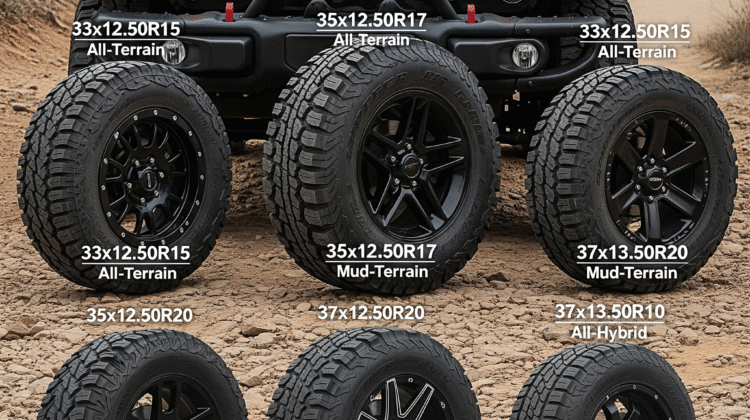
Jeep Off Road Tires Size Guide: Find the Right Fit for Adventure
If you own a Jeep, chances are you’ve thought about upgrading your tires. The right off-road tires don’t just change how your Jeep looks—they transform how it performs on trails, mud, sand, or rocky climbs. But choosing the perfect size can feel overwhelming. Too big, and you’ll sacrifice daily drivability. Too small, and you’ll lose out on that rugged off-road capability Jeep owners crave.
This guide breaks down everything you need to know about Jeep off-road tire sizes—from stock options to monster upgrades—so you can hit the trails with confidence.
Why Tire Size Matters
Jeep tires aren’t just about aesthetics. The size directly impacts:
- Ground clearance – Bigger tires help you clear rocks, ruts, and logs.
- Traction – Wider tread patterns give you more bite in mud and sand.
- Gearing & MPG – Larger tires can strain your transmission and affect fuel economy.
- Handling – Too large, and turning radius or stability may suffer.
In short: tire size is the balancing act between adventure and practicality.
Common Jeep Tire Sizes
Most Jeeps—Wrangler, Cherokee, Gladiator—are built to accommodate a range of sizes. Here’s a quick reference:
- Stock Sizes (29–32 inches)
- Ideal for daily drivers.
- Light trail capability.
- No lift required.
- Mid-Range (33–35 inches)
- Popular for Wrangler builds.
- Handles moderate to tough trails.
- Often requires a small lift (2–3 inches).
- Large Tires (37 inches and up)
- For serious off-road enthusiasts.
- Incredible ground clearance.
- Requires heavy suspension and drivetrain upgrades.
How to Choose the Right Size
When deciding, ask yourself:
- What’s my main use?
- Daily commuting with occasional trails → stick to 31–33 inches.
- Dedicated off-roading and overlanding → consider 35 inches or larger.
- Do I plan to lift my Jeep?
- Lifts expand your tire options but add cost.
- Am I ready for trade-offs?
- Larger tires mean more wear on axles, brakes, and steering.
Pro Tips for Jeep Owners
- Check local laws: Some regions restrict oversized tires.
- Match tire type with terrain:
- Mud-Terrain (MT) for swampy trails.
- All-Terrain (AT) for versatile overlanding.
- Sand tires for desert adventures.
- Don’t forget the spare: Your spare should match your setup—no one likes a mismatched limp home.
Where Tire Size Meets Overlanding
Off-road tires aren’t just about weekend mud runs. For Jeep overlanding trips—whether you’re exploring the Rockies, crawling slickrock in Moab, or cruising desert trails in Arizona—the right tire size means comfort, safety, and confidence when you’re far from help. Pair the right set of tires with a reliable rig, and you’ve got the ultimate overlanding machine.
And if you’re still in the market for your dream ride, keep an eye out for jeeps for sale that already come equipped with upgraded tires. Sometimes it’s more cost-effective to buy a Jeep with mods done for you.
Final Thoughts
Choosing the right Jeep off-road tire size is less about “bigger is better” and more about what suits your lifestyle. Think ahead, balance cost with capability, and remember: the best tire is the one that gets you where you want to go—whether that’s down the highway, across muddy trails, or into remote overlanding destinations.
So, what size will you choose for your adventure?
