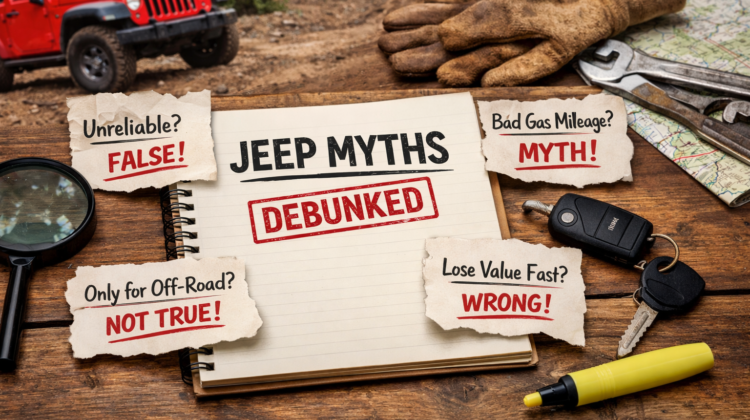
Jeep Myths Debunked: What Every Smart Buyer Should Know Before Negotiating
If you’re researching Jeep myths debunked, chances are you’re either considering buying one or negotiating a deal and want clarity before signing paperwork. Good move.
Jeeps inspire strong opinions. Some drivers swear by them. Others repeat outdated assumptions about reliability, comfort, or cost. The truth? Many widely circulated claims are either exaggerated or flat-out wrong.
This guide breaks down the most common misconceptions—and shows how understanding them gives you an edge when negotiating your purchase.
Why Jeep Myths Matter When Buying
Believing outdated information can:
- Cost you leverage in negotiations
- Lead you to overpay for certain trims
- Cause you to overlook strong resale value
- Push you toward unnecessary add-ons
Let’s separate fact from fiction.
1. Myth: Jeeps Are Unreliable
This is one of the most persistent claims in any “Jeep myths debunked” discussion.
The Reality
Reliability varies by:
- Model
- Engine type
- Maintenance history
- Previous owner usage (especially off-road use)
A well-maintained Jeep—especially newer models—can easily surpass 150,000 miles. What often skews perception is that Jeeps are more frequently driven in rugged conditions. Off-road use naturally increases wear and tear.
Buyer Negotiation Tip
When negotiating:
- Ask for full service records
- Check suspension components and undercarriage
- Use any worn bushings, shocks, or tires as leverage for price reduction
Don’t negotiate based on reputation—negotiate based on inspection facts.
2. Myth: Jeeps Have Terrible Gas Mileage
Older models? Yes, fuel economy wasn’t their strong suit.
Modern Jeeps? A different story.
The Reality
Newer engines—including turbocharged four-cylinders and hybrid options—offer competitive MPG for SUVs.
Fuel economy depends on:
- Engine configuration
- Tire size
- Lift kits
- Driving habits
Smart Negotiation Strategy
If the vehicle has:
- Oversized off-road tires
- Aftermarket lift kits
- Heavy steel bumpers
These modifications may reduce MPG. Use that as a value adjustment point during negotiations.
3. Myth: Jeeps Are Only Good for Off-Roading
Yes, they dominate trails—but they are not limited to them.
The Reality
Many Jeep models serve as:
- Daily commuters
- Family SUVs
- Winter-weather vehicles
- Long-distance road trip cars
Modern interiors offer:
- Advanced infotainment systems
- Heated seats
- Safety tech packages
The “trail-only” image is outdated.
Negotiation Insight
If a seller is emphasizing off-road capability but you’re buying for city driving:
- Don’t overpay for specialized off-road trims
- Consider mid-level trims with comfort features
- Compare pricing across trim levels before committing
4. Myth: Maintenance Is Extremely Expensive
The phrase “expensive to maintain” gets repeated often.
The Reality
Maintenance costs depend heavily on:
- Driving style
- Frequency of off-road use
- Aftermarket modifications
- Routine service adherence
Stock, daily-driven Jeeps typically have maintenance costs comparable to other midsize SUVs.
Practical Buyer Advice
Before closing a deal:
- Request a pre-purchase inspection
- Price-check common wear items:
- Brake pads
- Tires
- Suspension components
Use documented upcoming maintenance needs to negotiate downward.
5. Myth: Jeeps Don’t Hold Their Value
This one is simply inaccurate.
The Reality
Certain Jeep models have historically strong resale value, especially:
- Popular trims
- Limited editions
- Well-maintained low-mileage vehicles
Resale strength is one reason some used Jeeps seem “expensive.” Demand remains high.
How This Helps You
If resale value is strong:
- You can justify paying fair market price
- You gain long-term equity
- You reduce depreciation risk
When negotiating, focus on condition—not arbitrary price cuts.
6. Myth: Modified Jeeps Are Always Better
Aftermarket upgrades look impressive. But looks don’t equal value.
The Reality
Modifications can:
- Void warranties
- Reduce fuel efficiency
- Add mechanical stress
- Lower resale appeal
Not all buyers want heavily modified vehicles.
Negotiation Leverage
If the Jeep includes expensive mods:
- Ask for installation receipts
- Confirm professional installation
- Verify compatibility with factory systems
If documentation is missing, use that uncertainty to negotiate.
7. Myth: All Jeeps Ride Rough
Older solid-axle models had a stiffer ride. But suspension engineering has improved significantly.
The Reality
Ride comfort depends on:
- Suspension setup
- Tire selection
- Wheel size
- Trim level
Some trims are tuned more for comfort than trail performance.
Buyer Strategy
Test drive at:
- Highway speeds
- Stop-and-go traffic
- Uneven pavement
Ride quality is subjective—don’t let online comments decide for you.
Smart Buyer Checklist: Turning Jeep Myths Into Negotiation Power
When shopping for jeeps for sale, use this structured approach:
Before Visiting the Dealer
- Research trim differences
- Compare local pricing
- Check resale value trends
During Inspection
- Examine frame and undercarriage
- Look for off-road damage
- Verify maintenance documentation
During Negotiation
- Separate fact from reputation
- Use inspection findings, not stereotypes
- Request pricing adjustments for worn components
If you’re actively comparing listings, browse current inventory here:
👉 https://www.jeepsforsale.autos/jeep-for-sale/
Final Thoughts: Jeep Myths Debunked — and Buyer Confidence Restored
Understanding “Jeep myths debunked” isn’t about defending a brand. It’s about making data-driven decisions.
When you remove emotion and outdated assumptions, you gain:
- Better negotiation leverage
- Clearer value assessment
- Long-term ownership confidence
The key takeaway?
Don’t negotiate based on myths. Negotiate based on evidence.
If you approach your Jeep purchase with inspection discipline and informed skepticism, you’ll not only secure a better deal—you’ll buy with confidence.

Leave a Reply