How to Fix a Jeep Check Engine Light (Without Panicking)
Few things unsettle Jeep owners faster than that glowing check engine light. One minute you’re enjoying the open road, the next you’re wondering whether your vehicle is about to self-destruct. The good news? In many cases, the fix is straightforward, affordable, and well within reach for everyday drivers.
This guide explains how to fix a Jeep check engine light step by step—while also touching on related concerns like engine noise and vibration that often appear alongside warning lights. If you care about performance, reliability, and a smoother, quieter ride, you’re in the right place.
What the Jeep Check Engine Light Actually Means
The check engine light (CEL) is part of your Jeep’s Onboard Diagnostics (OBD-II) system. When a sensor detects something operating outside normal limits, the system stores a diagnostic code and turns on the light.
What the light is telling you:
- Solid check engine light – An issue needs attention soon
- Flashing check engine light – Stop driving immediately; serious engine damage is possible
Common triggers include emissions issues, ignition problems, airflow errors, and fuel system faults.
Step 1: Check the Gas Cap First
It may sound overly simple, but a loose or damaged gas cap is one of the most common causes of a Jeep check engine light.
What to do:
- Remove the gas cap
- Inspect it for cracks or worn seals
- Reinstall it until you hear a clear click
- Drive normally for 20–40 miles
If the system detects normal pressure again, the light may turn off on its own.
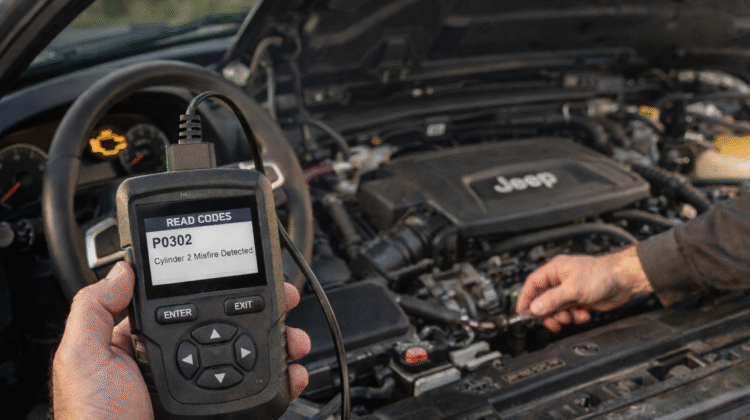
Step 2: Scan the Trouble Code
If the light stays on, the next step is reading the diagnostic code.
Ways to scan your Jeep:
- Use a personal OBD-II scanner
- Visit an auto parts store (many offer free scans)
- Schedule a professional diagnostic
The code (for example, P0301 or P0172) points directly to the system or cylinder experiencing trouble.
Step 3: Fix the Most Common Jeep Check Engine Light Causes
Once you have the code, addressing the issue becomes much easier. Below are some of the most frequent Jeep-specific problems.
Oxygen Sensor Problems
A failing oxygen sensor can lead to:
- Reduced fuel efficiency
- Rough idling
- Increased engine noise
Solution: Replace the faulty sensor to restore proper air-fuel balance.
Worn Spark Plugs or Ignition Coils
Misfires are a common cause of both warning lights and increased engine vibration.
Symptoms include:
- Shaking at idle
- Hesitation during acceleration
- Noticeable engine noise
Solution: Replace spark plugs and inspect ignition coils for cracks or wear.
Mass Airflow Sensor Issues
If the airflow entering your engine is misread, your Jeep may run rich or lean.
Signs include:
- Sluggish throttle response
- Loud intake sounds
- Reduced performance
Solution: Clean the sensor with a dedicated MAF cleaner or replace it if damaged.
Step 4: Address Engine Noise Alongside the Warning Light
Many drivers don’t realize that a check engine light and engine noise often go hand in hand. When combustion is inefficient, vibrations increase—and that noise makes its way into the cabin.
Jeep noise suppression tips that complement repairs:
- Replace worn engine mounts
- Fix exhaust leaks promptly
- Keep ignition components in excellent condition
- Use the correct oil grade and quality fuel
Fixing the underlying problem doesn’t just turn off the warning light—it often restores the solid, refined feel Jeep owners expect.
Step 5: Clear the Code and Test Drive
After completing repairs:
- Clear the code using the scanner
- Drive under varied conditions (city and highway)
- Monitor whether the light returns
If the light stays off, the issue has been successfully resolved.
When to Seek Professional Help
Some problems require advanced diagnostic tools or mechanical expertise.
Consider professional service if:
- The check engine light keeps coming back
- Multiple trouble codes appear
- Performance continues to decline
Ignoring ongoing issues can lead to costly repairs—and may reduce resale value if you later explore jeeps for sale.
Preventing Future Jeep Check Engine Lights
Prevention is always easier than repair.
Smart habits include:
- Following routine maintenance schedules
- Addressing minor symptoms early
- Paying attention to new noises or vibrations
- Using quality replacement parts
A well-maintained Jeep runs cleaner, quieter, and more reliably over the long term.
Final Thoughts
A Jeep check engine light doesn’t have to derail your plans or drain your wallet. With a calm, methodical approach—and attention to related noise issues—most causes can be identified and fixed quickly.
Whether you’re maintaining your current vehicle or researching jeeps for sale for your next upgrade, understanding warning lights gives you confidence, control, and peace of mind every time you turn the key.
